Acatenango vs Pacaya vs San Pedro: Which Guatemala Volcano Hike Is Right for You?
Guatemala's Most Famous Volcano Hikes, Compared
Guatemala is one of the best places in Latin America for volcano trekking. In a relatively compact country, you can hike an active volcano near Antigua, camp high above erupting lava, or climb a dramatic summit above Lake Atitlán with Maya villages and deep blue water spread below you. For many travelers, though, the big question is not whether to hike a volcano in Guatemala. It is which volcano hike to choose.
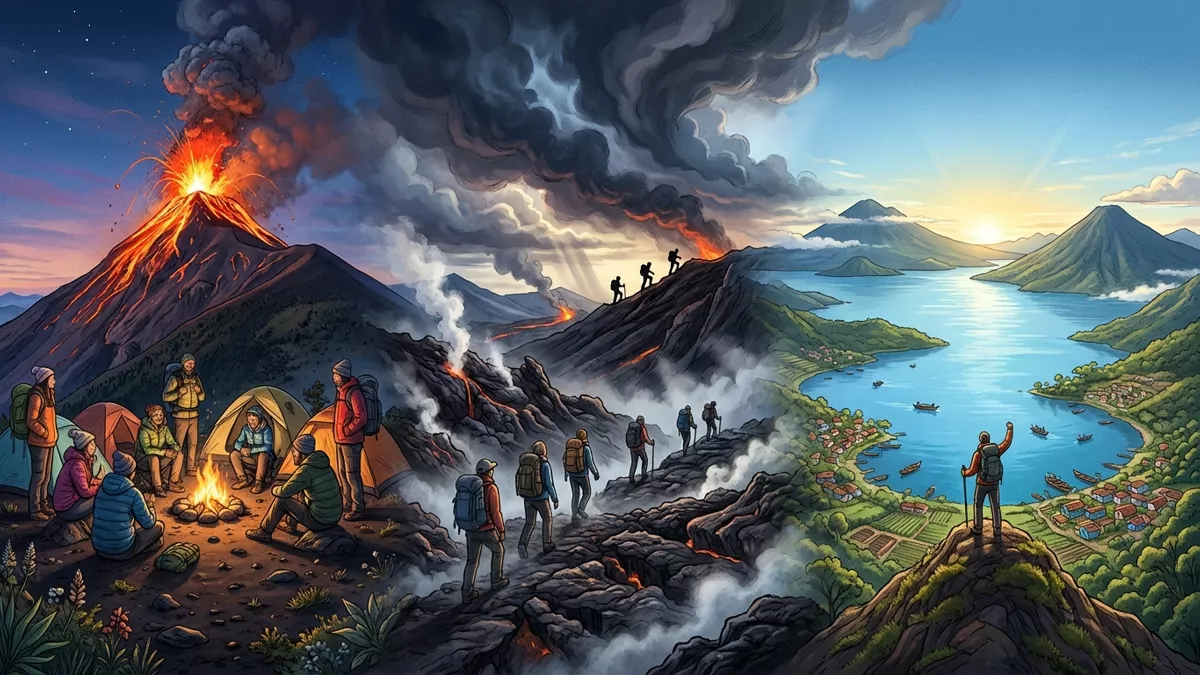
The three routes that come up again and again are Acatenango, Pacaya, and Volcán San Pedro. They are all memorable, but they deliver very different experiences. Acatenango is the legendary overnight challenge with front-row views of Volcán de Fuego erupting. Pacaya is the more accessible option, famous for lava fields, moonlike landscapes, and easy day-trip logistics from Antigua. San Pedro is the classic Lake Atitlán trek, combining forest trails, altitude, and one of the most beautiful summit panoramas in the country.
If you are planning a Guatemala itinerary that includes Antigua and Lake Atitlán, this comparison guide will help you choose the right trek for your energy level, budget, schedule, and travel style. It will also help you avoid common mistakes, especially if this is your first high-altitude hike in Central America.
The Quick Answer
If you want the most iconic and dramatic volcano experience in Guatemala, choose Acatenango. If you want the easiest active volcano day hike with less time commitment, choose Pacaya. If you want a rewarding summit hike with unforgettable views over Lake Atitlán, choose San Pedro.
- Best overall adventure: Acatenango
- Best for beginners and short itineraries: Pacaya
- Best for travelers staying at Lake Atitlán: San Pedro
- Best summit views: San Pedro and Acatenango
- Best active volcanic terrain: Pacaya
- Most physically demanding: Acatenango
1. Acatenango: Guatemala's Most Legendary Volcano Trek
Volcán Acatenango rises to approximately 3,976 meters (13,044 feet) and is widely considered Guatemala's signature volcano hike. The reason is simple: from Acatenango's ridge camps, you can look directly across to Volcán de Fuego, one of Central America's most active volcanoes. On clear nights, hikers often see glowing lava bursts, ash plumes, and thunder-like eruptions rolling across the valley.
This is not a casual stroll. Most people hike Acatenango as an overnight expedition from Antigua. The first day is a long, steep ascent through farmland, cloud forest, and exposed volcanic slopes to base camp. Depending on the operator, you may then do an optional extra hike toward Fuego or an early morning summit push to watch sunrise over the highlands.
Why People Love Acatenango
Acatenango feels cinematic. You get altitude, cold mountain air, huge skies, and an active volcano performing in front of you. For many travelers, it becomes the highlight of their Guatemala trip. It is also one of the rare hikes in the world where you can camp comfortably near a major eruptive landscape without needing mountaineering skills.
- Typical duration: 2 days / 1 night
- Difficulty: Hard
- Best base: Antigua Guatemala
- Main reward: Fuego eruption views, sunrise, high-altitude volcano scenery
- Typical price: Varies by operator, usually including transport, guide, meals, and camping gear
Who Should Choose Acatenango
Choose Acatenango if you have decent fitness, at least two free days, and you want a true bucket-list trek. It is especially good for travelers who enjoy big physical efforts with a dramatic payoff. If you are already spending a few nights in Antigua, it fits naturally into your route before moving on to Lake Atitlán or El Paredón.
Potential Downsides
The altitude and cold surprise many people. Nights can be freezing, especially from November to February. The hike is steep, dusty, and tiring even for active travelers. If you arrive in Guatemala and attempt Acatenango immediately after landing, there is a good chance your legs and lungs will hate you.
2. Pacaya: The Best Volcano Hike for First-Time Visitors
Volcán Pacaya is the most accessible volcano trek near Antigua and Guatemala City. At around 2,552 meters (8,373 feet), it is much lower than Acatenango, and the hike is significantly shorter. Most travelers visit as a half-day or day trip, which makes it ideal for tighter itineraries or for anyone who wants an active volcano experience without committing to an overnight expedition.
Pacaya is famous for its broad lava fields, black volcanic rock, and stark, almost extraterrestrial scenery. Conditions change over time depending on volcanic activity and trail access, but the general appeal remains the same: you get an active volcanic landscape with relatively little effort compared with Guatemala's bigger summit hikes.
Why People Love Pacaya
Pacaya delivers fast value. You can sleep in Antigua, drive out in the morning, hike through pine forest and volcanic ash, take dramatic photos on black lava slopes, and be back in town by afternoon for coffee or a late lunch. It is one of the most efficient adventure experiences in Guatemala.
- Typical duration: 4 to 6 hours total including transport, or half a day
- Difficulty: Easy to moderate
- Best base: Antigua Guatemala
- Main reward: Active volcano environment, lava fields, quick logistics
- Typical price: Generally cheaper than Acatenango, plus park entrance and guide costs depending on your booking
Who Should Choose Pacaya
Choose Pacaya if you are short on time, traveling with mixed fitness levels, or want an easier warm-up before tackling a harder trek. It is also a smart choice if you love volcanic landscapes but are not excited about sleeping in the cold at nearly 4,000 meters.
Potential Downsides
Pacaya is rewarding, but it is not the same emotional experience as camping on Acatenango or standing above Lake Atitlán from the summit of San Pedro. Some travelers come away thrilled by the terrain; others find it slightly more commercial and less epic. That does not make it a bad choice. It just means expectations matter.
3. San Pedro: The Classic Lake Atitlán Summit Hike
Volcán San Pedro rises above the southwestern shore of Lake Atitlán and reaches roughly 3,020 meters (9,908 feet). Unlike Acatenango and Pacaya, which are usually tied to Antigua, San Pedro is all about the lake. The trail climbs from the region around San Pedro La Laguna through farmland and cloud forest to a summit with sweeping views over the lake basin, surrounding volcanoes, and highland villages.
For travelers staying at Sababa Resort or elsewhere around San Pedro, this is one of the most memorable day hikes in the region. It combines physical challenge, local guiding, and the surreal beauty of a volcanic lake ringed by Maya communities.
Why People Love San Pedro
San Pedro feels personal in a way that larger tourist circuits sometimes do not. You are not just hiking a mountain. You are moving through one of Guatemala's most culturally rich landscapes. On a clear day, the summit view is extraordinary: Lake Atitlán below, the volcanoes Tolimán and Atitlán across the water, and village roofs glinting along the shoreline.
- Typical duration: 4 to 6 hours round trip, depending on pace and conditions
- Difficulty: Moderate to hard
- Best base: San Pedro La Laguna / Lake Atitlán
- Main reward: Summit panorama over Lake Atitlán, forest scenery, classic highland adventure
- Typical price: Park and guide costs vary; local guides are strongly recommended
Who Should Choose San Pedro
Choose San Pedro if your Guatemala itinerary centers on Lake Atitlán and you want one major outdoor adventure without leaving the region. It is a great fit for travelers who want a real workout but prefer a single-day trek instead of an overnight expedition. It also pairs well with more relaxed lake activities like kayaking, café-hopping, village visits, or yoga.
Potential Downsides
The trail is steep, and weather can shift quickly. Early starts are important because mornings are clearer and safer. This is not the volcano to do in flip-flops after a late night out. It deserves respect, water, layers, and a reputable guide.
Side-by-Side Comparison: Acatenango vs Pacaya vs San Pedro
Difficulty
Acatenango is the toughest by a clear margin. The altitude, steep climb, overnight gear, and cold make it the most demanding option. San Pedro is also challenging, especially if you are not acclimatized, but it is shorter and usually done as a day hike. Pacaya is the easiest and most approachable for casual travelers.
Views
Acatenango offers the most dramatic volcanic spectacle thanks to Fuego. San Pedro offers the most beautiful lake-and-village panorama. Pacaya gives you rugged volcanic terrain and broad views, but usually not the same emotional payoff as the other two.
Time Commitment
If you only have half a day, Pacaya wins easily. If you have one free day at Lake Atitlán, San Pedro is ideal. If you can dedicate two days and want a signature Guatemala memory, Acatenango is worth it.
Logistics
Pacaya is the simplest. Acatenango requires more preparation, better gear, and usually a tour operator. San Pedro is straightforward once you are at Lake Atitlán, especially if your hotel can help arrange a guide and transport to the trail entrance.
Best for Photography
Photographers will love all three, but for different reasons. Acatenango is best for eruption drama and alpine mood. Pacaya is best for stark black-lava textures and cinematic landscapes. San Pedro is best for sunrise light over Lake Atitlán and layered highland scenery.
Which Volcano Hike Fits Your Travel Style?
If You Are a First-Time Visitor to Guatemala
Pick Pacaya if you want the safest, easiest introduction to volcano trekking. It lets you experience Guatemala's volcanic identity without overcommitting your energy or schedule.
If You Want the Most Memorable Adventure
Pick Acatenango. It is harder, colder, and less comfortable, but that is exactly why people remember it for years.
If You Are Staying at Lake Atitlán
Pick San Pedro. It is the most logical and rewarding choice if your base is San Pedro La Laguna, Panajachel, or nearby lake towns. You do not need to backtrack to Antigua to have an excellent volcano experience.
If You Are Traveling as a Couple or With Mixed Fitness Levels
Pacaya is usually the best compromise. One person does not need to suffer just because the other person watched too many dramatic Acatenango reels on Instagram.
If You Want to Combine Volcanoes and Local Culture
San Pedro offers the strongest blend of nature and living culture. After your hike, you can spend the rest of your trip exploring Tz'utujil Maya communities, local cafés, artisan villages, and lakeside wellness experiences around Atitlán.
Essential Tips Before You Hike a Volcano in Guatemala
- Start early: Weather is usually clearest in the morning, especially around Lake Atitlán.
- Respect altitude: Drink water, avoid overdoing alcohol the night before, and do not underestimate breathlessness.
- Hire reputable guides: This is especially important for Acatenango and San Pedro.
- Wear layers: Guatemala's highlands can feel warm at the base and very cold up high.
- Bring cash: Entrance fees, tips, snacks, and local transport often require it.
- Choose based on your itinerary, not social media pressure: The best hike is the one that actually fits your body, time, and route.
Where to Base Yourself for the Best Volcano Experience
If your route starts in Antigua, then Acatenango or Pacaya make the most sense. Antigua has the strongest tour infrastructure, gear rental options, and transport network for these hikes.
If your route includes Lake Atitlán, especially San Pedro La Laguna, then Volcán San Pedro becomes the obvious move. It turns your lake stay into something bigger than just a scenic getaway. You get a genuine mountain challenge and then return to lakeside comfort, excellent food, and one of Guatemala's most photogenic settings.
For many travelers, the ideal combination is simple: Pacaya or Acatenango from Antigua, then San Pedro from Lake Atitlán if time and legs allow. But if you only choose one, the right answer depends on what kind of memory you want to bring home.
Final Verdict
Acatenango is the most iconic volcano hike in Guatemala. Pacaya is the easiest and most accessible. San Pedro is the best choice for travelers who want extraordinary summit views while exploring Lake Atitlán.
There is no universal winner. There is only the right trek for this trip.
If your itinerary already includes a stay at Lake Atitlán, do not overlook San Pedro. It may not be as viral as Acatenango, but it delivers something equally valuable: a powerful day of effort above one of the most beautiful landscapes in Central America.
FAQ: Guatemala Volcano Hikes
Which volcano hike in Guatemala is best for beginners?
Pacaya is usually the best volcano hike for beginners because it is shorter, lower in altitude, and easier to organize as a half-day trip from Antigua.
Is Acatenango harder than San Pedro?
Yes. Acatenango is generally harder than San Pedro because it is higher, colder, and usually done as an overnight hike with a longer ascent and more altitude exposure.
Can you hike San Pedro Volcano without a guide?
Some travelers attempt it independently, but hiring a local guide is strongly recommended for safety, route confidence, and supporting the local economy around Lake Atitlán.
How many days do you need for Acatenango?
Most travelers need two days and one night for the standard Acatenango hike from Antigua, including transport, the main ascent, camp, and the descent the next day.
Is Pacaya still active?
Yes, Pacaya is an active volcano, though visible lava access and exact trail conditions vary depending on recent volcanic activity and park regulations.
What should I pack for a Guatemala volcano hike?
Bring sturdy shoes, water, sun protection, a light rain layer, snacks, and warmer layers for higher elevations. For Acatenango, cold-weather gear is essential.
Which volcano hike has the best views in Guatemala?
That depends on your taste. Acatenango has the most dramatic eruptive views thanks to Fuego, while San Pedro has some of the best panoramic lake views in the country.
Is San Pedro Volcano worth it if I am already staying at Lake Atitlán?
Absolutely. If you enjoy hiking, San Pedro is one of the most rewarding outdoor experiences at Lake Atitlán and a strong complement to boat trips, café culture, and village exploration.