25 Best Things to Do in San Pedro La Laguna (Local's Guide 2026)
Looking for the best things to do in San Pedro La Laguna? This comprehensive guide covers 25 incredible activities in one of Lake Atitlán’s most vibrant villages. From sunrise volcano hikes to laid-back lakeside bars, cultural immersion to wellness retreats, San Pedro has something for every type of traveler.
San Pedro La Laguna sits on the southwestern shore of Lake Atitlán, Guatemala—widely considered one of the most beautiful lakes in the world. With a population of around 13,000, this small town punches well above its weight in terms of things to see and do. It’s known for its backpacker-friendly vibe, excellent Spanish schools, thriving coffee culture, and the majestic San Pedro Volcano towering overhead.
As the team behind Sababa Resort in San Pedro, we’ve spent years exploring every corner of this town and the surrounding lake. This guide shares our insider knowledge to help you make the most of your time here.
- San Pedro La Laguna Overview
- Epic Volcano & Sunrise Hikes
- Water Activities
- Cultural Experiences
- Wellness & Yoga
- Day Trips Around the Lake
- Nightlife & Bars
- Spanish Schools
- Coffee & Chocolate Experiences
- Photography Spots
- Free Things to Do
- Rainy Day Activities
- Best Activities by Traveler Type
- Where to Stay
- How to Get There
- Practical Information
- Frequently Asked Questions
- Responsible Travel
- Beyond San Pedro
San Pedro La Laguna Overview
Before diving into activities, here’s a quick orientation:
The Vibe
San Pedro is the most backpacker-friendly village on Lake Atitlán. It’s younger, livelier, and more affordable than neighboring towns. You’ll find a mix of budget travelers, digital nomads, Spanish students, and wellness seekers—plus a strong local Tz’utujil Maya community that makes the town authentic rather than touristy.
Geography
The town stretches along the lakeshore and up the hillside. The two main docks (Muelle 1 near the center, Muelle 2 on the quieter side) serve lanchas (boats) to other lake villages. The 3,020-meter San Pedro Volcano dominates the skyline.
Getting Around
San Pedro is walkable, though the hills can be steep. Tuk-tuks (three-wheeled rickshaws) are everywhere and cost Q5-15 per ride. Simply flag one down and state your destination.
Key Neighborhoods
- Muelle 1 / Main Dock Area: Tourist center with most bars, restaurants, and hostels. This is where most lanchas from Panajachel arrive.
- Muelle 2 / Second Dock: Quieter, more residential, some excellent lakefront accommodations. Boats from Santiago often land here.
- Centro / Town Center: Around the church and market. More local feel, authentic restaurants, daily life.
- Hillside: Above the main strip. Quieter accommodations with views, but requires more walking (or tuk-tuk rides).
Local Etiquette
San Pedro is home to the Tz’utujil Maya, one of Guatemala’s 22 distinct Maya groups. While tourism is welcome, respecting local culture enhances your experience:
- Photography: Always ask before photographing locals, especially those in traditional dress (traje típico)
- Markets: Don’t haggle aggressively—prices are often already fair
- Dress: While swimwear is fine at the lake, cover up when visiting the church or market
- Language: Learning a few words of Spanish (or even Tz’utujil) goes a long way
1-3. Epic Volcano & Sunrise Hikes
1. San Pedro Volcano Hike
The iconic San Pedro Volcano (3,020 m / 9,908 ft) rises directly above town and offers one of Guatemala’s most rewarding hikes.
- Difficulty: Challenging (steep, 1,200m elevation gain)
- Duration: 4-5 hours up, 2-3 hours down
- Cost: Q25 park entrance + Q100-150 for recommended guide
- Best time: Start at 5-6 AM to reach summit before clouds roll in
The trail winds through cloud forest filled with hummingbirds, orchids, and endemic wildlife. At the summit, on a clear day, you’re rewarded with 360-degree views of Lake Atitlán, neighboring volcanoes, and on exceptionally clear mornings, the Pacific Ocean.
Important Safety Note: Always hike with a registered guide and in a group. Past years saw occasional robberies on the trail, but organized tours with licensed guides (coordinated with local community patrols) are now safe. Never hike alone or without a guide.
2. Indian Nose (Rostro Maya) Sunrise Hike
This sunrise hike is the most popular activity at Lake Atitlán—and for good reason. The viewpoint offers jaw-dropping panoramas of the lake and all surrounding volcanoes at dawn.
- Difficulty: Moderate (short but steep)
- Duration: 20-30 minute hike to viewpoint
- Cost: Q100-150 including transport and guide
- Departure: 3:30-4:00 AM pickup from your hotel
Tours depart San Pedro in the early morning darkness, driving to the trailhead near Santa Clara La Laguna. The short climb is worth every step when the sun crests the horizon, painting the lake and volcanoes in golden light.
Tip: Book through your accommodation or Sababa Reception the day before. Bring warm layers—it’s cold at altitude before sunrise.
What to Bring for Sunrise Hikes
- Warm jacket or fleece (temperatures can drop below 10°C at altitude)
- Headlamp or phone flashlight for the dark hike
- Water and a small snack
- Camera with charged battery
- Cash for guide tips
- Closed-toe shoes with good grip
3. Cerro Tzankujil Nature Reserve
A gentler hike perfect for those wanting nature without the volcano challenge.
- Difficulty: Easy to moderate
- Duration: 1-2 hours
- Cost: Q30 entrance fee
- Features: Lookout points, swimming platform, cliff jumping spots, Mayan altar
The reserve is a 15-minute walk from central San Pedro along the lakeshore. Trails wind through forest to stunning viewpoints over the lake. You can swim from the wooden platform or—for the brave—cliff jump into the crystal-clear water below.
Volcano Hiking Comparison
| Hike | Difficulty | Time | Cost | Best For |
|---|---|---|---|---|
| San Pedro Volcano | Hard | 6-8 hours | Q125-175 | Fit hikers wanting a challenge |
| Indian Nose | Moderate | 3-4 hours (total) | Q100-150 | Everyone, sunrise lovers |
| Cerro Tzankujil | Easy | 1-2 hours | Q30 | Families, swimmers, casual hikers |
4-7. Water Activities
4. Kayaking on Lake Atitlán
Paddling across the lake is a peaceful way to experience its beauty up close and visit neighboring towns.
- Cost: Q50-100/hour for kayak rental, Q200-300 for half-day guided tour
- Where to rent: Various lakefront hostels and tour operators
- Best routes: San Pedro to San Juan (30 min), San Pedro to San Marcos (45 min)
Pro tip: Mornings are calmest. The “Xocomil” wind typically picks up after 11 AM, creating waves that make paddling more challenging.
5. Stand-Up Paddleboarding (SUP)
SUP has become increasingly popular on Lake Atitlán, offering a unique perspective of the volcanic landscape.
- Cost: Q75-125/hour, lessons available for Q150-200
- Best time: Early morning when the lake is glassy calm
- Where: Rentals from lakefront hotels and dedicated SUP operators
6. Swimming in the Lake
Lake Atitlán’s waters are refreshing (cool but not cold) and generally clean around San Pedro.
Best swimming spots:
- Cerro Tzankujil: Swimming platform and cliff jumping (Q30 entrance)
- Hotel docks: Several lakefront accommodations have swimming access
- Public beaches: Small areas near both docks
Note: While the lake looks pristine, avoid swallowing water due to occasional algae blooms. The water is safe for swimming but not drinking.
7. Fishing Trips
Lake Atitlán is home to black bass introduced in the 1950s. Local fishermen offer guided trips.
- Cost: Q200-400 for a half-day with local guide and boat
- Best time: Early morning
- What you’ll catch: Largemouth black bass, sometimes quite large
Lake Safety Tips
Lake Atitlán is generally safe for water activities, but keep these points in mind:
- Xocomil wind: The afternoon wind can create significant waves. Plan water activities for mornings.
- Depth: The lake is extremely deep (up to 340 meters in places). Wear a life jacket if you’re not a strong swimmer.
- Water quality: Safe for swimming but not drinking. Avoid swallowing water.
- Boat traffic: Stay alert for lanchas when kayaking or swimming near docks.
- Valuables: Use waterproof bags or leave valuables at your accommodation.
8-12. Cultural Experiences
8. Museo Tz’unun Ya’ (San Pedro Museum)
This small but fascinating museum documents the history and culture of the Tz’utujil Maya people who have lived around Lake Atitlán for centuries.
- Cost: Q15 entrance
- Duration: 30-45 minutes
- Highlights: Film about local history, traditional clothing displays, photos of old San Pedro
- Special feature: Staff will identify your “nahual” (Maya spirit animal) based on your birth date
9. Traditional Weaving Workshops
Learn the ancient art of backstrap loom weaving from local Maya women. This centuries-old tradition produces the vibrant textiles (huipiles) worn throughout the highlands.
- Cost: Q100-200 for a 2-hour workshop
- What you’ll learn: Basic weaving techniques, natural dye preparation, cultural significance
- Where: Ask at your accommodation or visit nearby San Juan La Laguna for dedicated cooperatives
10. Mayan Ceremonies
Experience traditional Maya spirituality at ceremonies led by local spiritual guides (ajq’ijab’). These rituals honor the Maya calendar and connect participants with ancestral wisdom.
- Cost: Q100-300 depending on ceremony type
- What to expect: Fire ceremonies, offerings, prayers in Tz’utujil language
- Respect: Approach with genuine curiosity and respect—this is living spirituality, not performance
Important: Seek out authentic ceremonies through reputable guides. Avoid “tourist trap” versions that commercialize sacred practices.
11. Local Market Experience
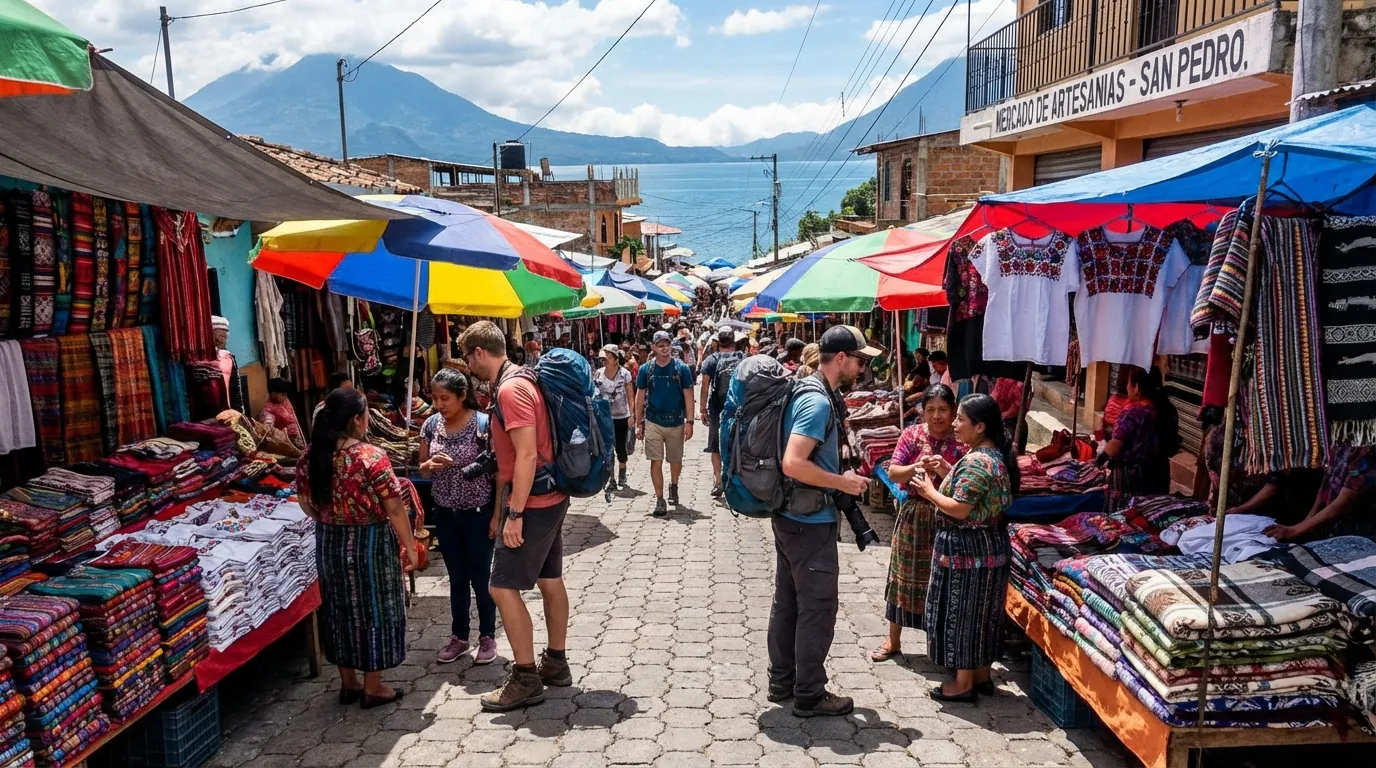
San Pedro’s market operates daily but is busiest on Thursday and Sunday mornings. It’s where locals shop for produce, household goods, and traditional clothing.
- Location: Central San Pedro, near the church
- What to buy: Fresh fruit, vegetables, handwoven textiles, local handicrafts
- Tips: Bring small bills (Q5, Q10, Q20), bargaining is minimal at the produce stalls
12. Church of San Pedro
The town’s central Catholic church blends Spanish colonial architecture with Maya spirituality—a common fusion in highland Guatemala.
- Entry: Free
- Best time: Sunday morning for services
- Note: Photography may be restricted during services; always ask permission
Understanding Tz’utujil Culture
The Tz’utujil Maya have lived around Lake Atitlán for over 1,000 years. Their culture remains vibrant and distinct:
- Language: Tz’utujil is still the first language for many locals, with Spanish as a second language
- Traditional dress: Women wear intricately woven huipiles; men traditionally wore red shorts (now less common)
- Economy: Fishing, agriculture (coffee, corn, avocados), and increasingly, tourism
- Religion: A blend of Catholicism and Maya spirituality, including ancestor veneration
- Calendar: The Maya calendar (Cholq’ij) remains important for ceremonies and life events
Engaging respectfully with local culture—visiting the museum, taking weaving lessons, or attending ceremonies—enriches your experience and supports the community.
13-15. Wellness & Yoga
While San Marcos La Laguna is the lake’s “yoga capital,” San Pedro has a growing wellness scene of its own.
13. Yoga Classes
Several studios and hostels offer daily yoga classes, from beginner to advanced levels.
- Cost: Q50-100 per drop-in class
- Styles: Hatha, Vinyasa, Yin, Ashtanga
- Where: Check Hostel Fe, Casa Elena, and lakefront accommodations for schedules
14. Thermal Pools & Natural Hot Springs
Solar-heated pools offer a relaxing way to soak while enjoying volcano views.
- Cost: Q40-75 for pool access
- Features: Hot pool, cold plunge pool, lake views
- Location: Chi-Kaq’abal (near the San Pedro volcano trailhead)
15. Temazcal (Maya Sauna)
Experience a traditional Maya sweat lodge ceremony—a purifying ritual combining steam, medicinal herbs, and spiritual practice.
- Cost: Q150-300 per session
- Duration: 1.5-2 hours
- What to expect: Heated stone lodge, herbal steam, guided meditation/prayers
- Preparation: Hydrate well beforehand, avoid alcohol the night before
More Wellness Options
Beyond structured activities, San Pedro offers numerous ways to relax and rejuvenate:
- Massage: Several practitioners offer Swedish, deep tissue, and traditional Maya massage (Q150-300/hour)
- Acupuncture: Available at select wellness centers
- Sound healing: Tibetan singing bowl sessions, especially in San Marcos
- Cacao ceremonies: Heart-opening rituals using ceremonial-grade cacao
- Meditation sessions: Free or donation-based sessions at various locations
- Holistic retreats: Multi-day programs combining yoga, meditation, and healing practices
16-19. Day Trips Around the Lake
16. San Juan La Laguna (Art & Coffee)
Just a 10-minute walk from San Pedro, San Juan is the artistic heart of the lake—known for murals, textile cooperatives, and exceptional coffee.
- Getting there: 10-15 minute walk along the lakeshore path or Q15 by lancha
- Highlights: Street murals, weaving cooperatives, coffee plantations, natural dye workshops
- Time needed: Half day to full day
Don’t miss: The women’s weaving cooperative where you can watch artisans create intricate textiles using ancient techniques.
17. San Marcos La Laguna (Yoga & Spirituality)
This small village is the spiritual center of Lake Atitlán—packed with yoga shalas, meditation centers, and holistic healing practitioners.
- Getting there: 10 min by lancha (Q15-20), 45 min by kayak
- Highlights: Yoga retreats, meditation, crystal shops, vegetarian restaurants, peaceful vibe
- Time needed: Half day minimum, many stay for weeks
18. Santiago Atitlán (Culture & Tradition)
The largest and most traditional of the lake towns, Santiago is home to the famous Maximón shrine—a syncretic Maya/Catholic folk saint.
- Getting there: 15-20 min by lancha (Q25-30)
- Highlights: Maximón shrine, daily market, traditional Tz’utujil dress, weaving museum
- Time needed: Half day
Cultural note: Maximón (pronounced mah-shee-MOHN) is a unique deity worshipped in Santiago—part Maya god, part Catholic saint, with offerings of cigarettes and rum. Visiting his shrine requires a small donation and respectful attitude.
19. Chichicastenango Market (Thursday/Sunday)
One of the largest indigenous markets in the Americas, “Chichi” draws traders from across the highlands.
- Getting there: Shuttle from San Pedro (Q100-150 round trip, 2 hours each way)
- Market days: Thursday and Sunday only
- What to buy: Textiles, masks, jade jewelry, woodcarvings, pottery
- Tips: Arrive early (before 10 AM), bargain respectfully, bring cash
More Day Trip Options
Beyond the lake, several destinations make excellent day trips from San Pedro:
- Sololá Market (Tuesday/Friday): Less touristy than Chichi, more authentic. 45 min by bus.
- Panajachel: The largest town on the lake—shopping, ATMs, restaurants, boat connections. 30 min by lancha.
- Santa Cruz La Laguna: Quiet village, excellent for hiking and kayaking. 15 min by lancha from Panajachel.
- Jaibalito: Tiny, car-free village. Ultimate tranquility. Only accessible by boat.
- Antigua Guatemala: Full-day trip (2.5 hours each way), but worth it for colonial architecture. Book through shuttle companies.
Day Trip Planning Table
| Destination | Transport | Time | Cost | Highlights |
|---|---|---|---|---|
| San Juan | Walk/Lancha | 15 min | Free/Q15 | Art, coffee, weaving |
| San Marcos | Lancha | 10 min | Q15-20 | Yoga, spirituality, peace |
| Santiago | Lancha | 15-20 min | Q25-30 | Maximón, market, tradition |
| Chichicastenango | Shuttle | 2 hours | Q100-150 | Massive market |
| Panajachel | Lancha | 30 min | Q25 | Shopping, services |
20-21. Nightlife & Bars
San Pedro is the nightlife capital of Lake Atitlán—the only lakeside town with a real bar scene.
20. Bar Sublime
The most popular bar in San Pedro, located right on the water near Muelle 1.
- Vibe: Relaxed daytime, lively at night
- Features: Live music, pool tables, fire pit, dock seating over the lake
- Drinks: Full bar, good cocktails, reasonable prices
- Best for: Sunset drinks, meeting other travelers
21. Alegre Pub & Late Night Scene
When other bars wind down, Alegre keeps going—often the last place standing on a big night.
- Vibe: Backpacker party central
- Features: Dance floor, DJ nights, international crowd
- Hours: Often open until 3-4 AM on weekends
Other notable spots:
- D’noz Bar: Rooftop views, craft cocktails
- Buddha Bar: Chill vibes, good for sunset
- Zoola: Israeli-run restaurant/bar with a pool (yes, a swimming pool)
Night safety: San Pedro is generally safe at night, but stick to lit areas and travel in groups after midnight. Tuk-tuks are available until late.
Weekly Nightlife Calendar
- Monday-Tuesday: Quiet nights—good for rest or casual drinks
- Wednesday: Some bars have quiz nights or special events
- Thursday: Nightlife picks up—locals’ weekend starting
- Friday: Main party night—all venues lively
- Saturday: Busiest night—expect crowds at popular bars
- Sunday: Wind-down vibes, some bars host sunset sessions
Local Drinks to Try
- Ron Zacapa: Guatemala’s premium rum—smooth, sippable, world-renowned
- Gallo: The national beer—light, refreshing, everywhere
- Michelada: Beer with lime, Worcestershire, hot sauce—great for hangovers
- Limonada con hierbabuena: Fresh lemonade with mint (non-alcoholic)
- Café con ron: Coffee with rum—perfect after-dinner drink
22. Spanish Schools
Learning Spanish is one of the main reasons travelers come to San Pedro. The combination of affordable one-on-one instruction, full immersion environment, and beautiful setting makes it an ideal place to study.
Why Learn Spanish in San Pedro?
- Cost: Q800-1,200 ($100-150) per week for 20 hours of one-on-one instruction
- Immersion: Practice with locals daily in real situations
- Flexibility: Start any Monday, commit for 1 week or 3 months
- Extras: Some schools include homestay, cultural activities, volunteer opportunities
Recommended Schools
- Corazón Maya: Community-run, profits support local education
- San Pedro Spanish School: Long-established, excellent reputation
- Ixchel Spanish School: Small classes, personalized attention
Tip: Many schools offer discounts for multi-week enrollment. Ask about combination packages that include accommodation.
Spanish School Comparison
| School | Price/Week (20hrs) | Highlights | Best For |
|---|---|---|---|
| Corazón Maya | Q900-1,100 | Community-run, cultural activities | Socially-conscious learners |
| San Pedro Spanish School | Q1,000-1,200 | Established reputation, experienced teachers | Serious students |
| Ixchel Spanish School | Q800-1,000 | Small classes, flexible scheduling | Budget learners |
| Casa Rosario | Q1,100-1,300 | Homestay included, total immersion | Full immersion seekers |
Tips for Learning Spanish in San Pedro
- Practice outside class: Use Spanish at markets, restaurants, with tuk-tuk drivers
- Take notes: Keep a vocabulary notebook and review daily
- Watch movies: Many hostels screen Spanish-language films
- Make local friends: The best learning happens in real conversations
- Be patient: Fluency takes time—celebrate small victories
23-24. Coffee & Chocolate Experiences
23. Coffee Plantation Tours
Guatemala produces some of the world’s finest coffee, and the volcanic soil around Lake Atitlán is perfect for growing premium beans.
- Cost: Q100-200 for a farm tour with tasting
- Duration: 2-3 hours
- What you’ll learn: Coffee growing, harvesting, processing, roasting, and brewing
- Where: Café Cristalinas (San Pedro), community cooperatives in San Juan
Some tours include horseback riding through the coffee fields for an extra fee.
24. Chocolate Making Workshops
Cacao has been cultivated in Guatemala for millennia—the Maya considered it sacred. Learn to make chocolate the traditional way.
- Cost: Q100-150 for workshop
- Duration: 2-3 hours
- What you’ll do: Roast cacao beans, grind on traditional stone, add spices, shape your own chocolate
Best Cafés in San Pedro
San Pedro has an excellent café scene—here are our favorites:
- Café Atitlán: Lakeside views, excellent pour-over, peaceful atmosphere
- Café Sababa: Israeli-influenced menu, strong espresso, great breakfast spot
- Fe Coffee Roasters: Locally roasted beans, knowledgeable baristas, minimalist vibe
- The Clover: Cozy interior, specialty drinks, good for work sessions
- Zoola Café: Poolside setting, all-day menu, social atmosphere
Food Scene Beyond Coffee
San Pedro’s restaurant scene is surprisingly diverse, reflecting its international visitor base:
- Guatemalan: Comedor Don Pedro, Comedor Típico—authentic, affordable local food
- Israeli: Zoola, Circles—hummus, falafel, shakshuka (large Israeli backpacker community)
- Italian: Al Tempo, Restaurante Italiano—wood-fired pizza, fresh pasta
- Asian: Buddha Bar (Thai), Japonés (Japanese)—fusion and authentic options
- Vegetarian/Vegan: Idea Connection, Fifth Dimension—plant-based with lake views
- Street food: Tacos, pupusas, tostadas from vendors near the market
25. Photography Spots
Lake Atitlán is incredibly photogenic. Here are the best spots around San Pedro:
Sunrise Spots
- Indian Nose: The iconic sunrise viewpoint (requires early morning tour)
- Hotel rooftops: Several accommodations have terraces with east-facing views
- Muelle 2 area: Watch the sun rise over the volcanoes across the lake
Sunset Spots
- Bar Sublime dock: Sun sets behind the hills, colors reflect on the lake
- Cerro Tzankujil viewpoint: Elevated perspective of the golden hour
- San Pedro Volcano slopes: If you’re hiking, the afternoon light is magical
Street Photography
- San Pedro market: Vibrant colors, local life, traditional dress
- San Juan murals: Colorful street art throughout the village
- Church plaza: Local families, vendors, daily life
Landscape Photography
- Mirador above town: Overview of San Pedro with volcano backdrop
- From the lake: Rent a kayak for unique water-level perspectives
- Approaching by boat: The view of San Pedro from the lancha is classic
Photography ethics: Always ask permission before photographing local people, especially those in traditional dress. A smile and gesture usually works even without shared language. Some locals appreciate a small tip (Q5-10) for photos.
Photography Gear Recommendations
- Camera: A mirrorless or DSLR captures the best quality, but modern smartphones work well too
- Wide-angle lens: Essential for landscape shots and the vast lake views
- Telephoto: Useful for volcano details and wildlife (hummingbirds!)
- Waterproof case/bag: Protect gear from afternoon rain and lake spray
- Extra batteries: Cold mornings (like Indian Nose) drain batteries faster
- ND filter: For long exposures of the lake
- Tripod: Small, lightweight one for sunrise/sunset shots
Best Photo Times
- 5:30-7:00 AM: Golden hour, calm lake, volcano reflections
- 10 AM-3 PM: Harsh light—good for street scenes, bad for landscapes
- 4:00-6:00 PM: Golden hour returns, dramatic clouds often form
- Blue hour: Just after sunset—magical lake colors
Free Things to Do
Traveling on a tight budget? San Pedro has plenty of free activities:
- Walk to San Juan La Laguna: Beautiful lakeshore path (15-20 min)
- Explore the market: Window shopping and people watching cost nothing
- Lake swimming: Several public access points along the shore
- Watch sunset from the docks: Spectacular daily show
- Hike the town viewpoints: Multiple miradores (lookouts) around San Pedro
- Visit the church: Peaceful and culturally interesting
- Practice Spanish with locals: Most residents are happy to chat
- Read in a café: Buy one coffee, enjoy hours of ambiance
Rainy Day Activities
During rainy season (May-October), afternoon thunderstorms are common. Here’s how to stay entertained:
- Take a Spanish class: Productive use of indoor time
- Museum Tz’unun Ya’: Perfect rainy day cultural activity
- Café hopping: San Pedro has excellent coffee shops with cozy atmospheres
- Movie nights: Several hostels screen films in communal areas
- Board games at your accommodation: Many hostels have extensive game collections
- Massage or spa treatment: Several affordable options in town
- Cooking class: Learn to make pepián, tamales, or other Guatemalan dishes
- Plan your next destination: Research El Paredón beach, Antigua, Semuc Champey
Rain tip: Storms usually pass within 1-3 hours. Plan active outdoor activities for mornings, relax during afternoon rains, then enjoy clear evenings.
Understanding Rainy Season
Rainy season (May-October) shouldn’t deter your visit. Here’s what to expect:
- Mornings: Usually clear and beautiful—perfect for outdoor activities
- Early afternoon: Clouds build over the volcanoes
- 3-6 PM: Typical rain window—sometimes dramatic thunderstorms
- Evenings: Often clear again, fresh air, spectacular sunsets
Rainy season advantages:
- Fewer tourists, lower prices
- Lush, green landscapes
- Dramatic cloud formations for photography
- Waterfalls at their best
- More authentic, less crowded experience
Best Activities by Traveler Type
For Solo Travelers
- Spanish school (meet people, structured days)
- Group volcano hikes
- Bar Sublime (easy to meet others)
- Hostel activities and day trips
- Yoga classes
For Couples
- Indian Nose sunrise (romantic morning)
- Kayak to San Marcos for lunch
- Temazcal ceremony for two
- Sunset drinks at lakeside bar
- Coffee tour together
For Families with Kids
- Cerro Tzankujil (swimming, manageable hike)
- Kayaking (tandem kayaks available)
- Chocolate making workshop
- Boat rides around the lake
- Market exploration
For Adventure Seekers
- San Pedro Volcano hike
- Cliff jumping at Tzankujil
- Multi-day volcano trek (Acatenango from Antigua)
- Kayak circumnavigation of the lake
- Paragliding (available through tours from Panajachel)
For Wellness Seekers
- Yoga classes
- Temazcal ceremony
- Thermal pools
- Day trip to San Marcos wellness centers
- Meditation retreats
For Budget Travelers
- Free activities (swimming, hiking viewpoints, walking to San Juan)
- Comedor meals (Q20-35 for filling local food)
- Dorm accommodations (Q50-80/night)
- Happy hour deals at bars
- Self-guided lake village exploration via lancha
For Photography Enthusiasts
- Indian Nose sunrise (iconic shot)
- San Juan murals
- Market day portraits
- Lake reflections at dawn
- Volcano silhouettes at sunset
Sample Itineraries
3 Days in San Pedro (Action-Packed)
Day 1: Arrive, explore town, sunset drinks at Bar Sublime, nightlife
Day 2: Indian Nose sunrise, sleep in, afternoon kayak to San Juan, evening rest
Day 3: Cerro Tzankujil hike and swim, lunch at lakeside café, depart or extend
5 Days in San Pedro (Balanced)
Day 1: Arrive, settle in, explore Muelle 1 area, sunset, light dinner
Day 2: Museum visit, market exploration, afternoon yoga class, nightlife
Day 3: San Pedro Volcano hike (full day), evening recovery
Day 4: Day trip to Santiago (Maximón) and San Juan (art/coffee), sunset at Sababa
Day 5: Indian Nose sunrise, morning rest, afternoon at Tzankujil, farewell dinner
7+ Days in San Pedro (Full Immersion)
All of the above, plus:
- Spanish classes (4 hours/day)
- Day trip to San Marcos for yoga retreat
- Chichicastenango market (Thursday or Sunday)
- Coffee plantation tour
- Chocolate making workshop
- Temazcal ceremony
- Multiple nights out to experience the full social scene
Where to Stay in San Pedro
San Pedro has accommodation for every budget, from Q50 dorm beds to boutique lakefront hotels.
Budget (Q50-150/night)
- Hostel Fe: Social hostel with pool, yoga classes, and lake views. Great for meeting people.
- Mr. Mullet’s: Party hostel near the main dock. Budget beds, lively atmosphere.
- Hotel Mikaso: Simple rooms, clean, good value. Central location.
Mid-Range (Q200-500/night)
- Sababa Resort: Our home! Comfortable rooms with lake views, community atmosphere, excellent restaurant. Perfect balance of social and peaceful.
- Hotel Isla Verde: Beautiful gardens, pool, lakefront setting.
- Casa Elena: Charming guesthouse with yoga studio and vegetarian restaurant.
Comfort (Q500-1,000+/night)
- Hotel Casa del Mundo: Stunning lakefront property, only accessible by boat. Special occasion worthy.
- Lush Atitlan: Eco-boutique with infinity pool, organic farm, spa services.
- Villa Sumaya: Wellness retreat center with beautiful accommodations.
Booking Tips
- High season (Nov-Apr): Book at least a week ahead, especially for weekends
- Holidays: Book 2-4 weeks ahead for Christmas, New Year, Easter
- Long stays: Ask for weekly/monthly discounts—many places offer 20-40% off
- Location preference: Muelle 1 area = social, nightlife nearby. Muelle 2/hillside = quieter.
How to Get to San Pedro La Laguna
Most travelers reach San Pedro from Guatemala City or Antigua. Here’s a quick overview:
From Guatemala City Airport
- Shared shuttle: Q280-350 ($35-45), 4-5 hours. Book through GuateGo or Atitlan Tours.
- Private transfer: Q950-1,200 ($120-150) for up to 3 people. Direct, flexible timing.
- Chicken bus: Q35-50 ($4-6), 5-7 hours with transfers. Adventure for budget travelers.
See our complete guide: How to Get from Guatemala City to Lake Atitlán
From Antigua
- Shared shuttle: Q200-280 ($25-35), 2.5-3 hours
- Departure times: Typically 8 AM, 11 AM, 2 PM
From Other Lake Towns
- Panajachel: Lancha boat, 25-30 min, Q25
- San Marcos: Lancha boat, 10 min, Q15
- Santiago: Lancha boat, 15-20 min, Q25
Arriving by Boat
If coming by lancha from Panajachel or other towns:
- Most boats arrive at Muelle 1 (main dock, near town center)
- Some boats stop at Muelle 2 (quieter side of town)
- Confirm which dock your accommodation is near before traveling
- Tuk-tuks wait at both docks (Q5-15 to anywhere in town)
Practical Information
How Many Days in San Pedro?
Minimum: 2-3 days to hit the highlights (Indian Nose, kayaking, one day trip, nightlife)
Ideal: 5-7 days to experience the town at a relaxed pace, take a Spanish course, or explore multiple lake villages
Extended: Many travelers end up staying weeks or months—the “Lake Atitlán vortex” is real!
Best Time to Visit
- Dry season (Nov-Apr): Best weather, clearest skies, busiest with tourists
- Shoulder months (May, Oct): Fewer crowds, occasional rain, good value
- Rainy season (Jun-Sep): Afternoon storms, lush green landscapes, lowest prices
Budget Breakdown
| Item | Budget | Mid-Range | Comfort |
|---|---|---|---|
| Accommodation/night | Q60-120 | Q200-400 | Q500-800 |
| Meals/day | Q50-80 | Q100-150 | Q200-300 |
| Activities/day | Q50-100 | Q150-300 | Q300-500 |
| Daily Total | Q160-300 ($20-40) | Q450-850 ($60-110) | Q1,000-1,600 ($130-210) |
Safety Tips
- San Pedro is generally safe, but use common sense—don’t flash valuables
- Always use licensed guides for volcano hikes
- Stick to lit areas at night
- Secure belongings when swimming or kayaking
- Keep phones and cameras in waterproof bags on the lake
Money & ATMs
- Currency: Guatemalan Quetzal (GTQ). Roughly Q8 = $1 USD.
- ATMs: Limited in San Pedro—Banrural ATM near Muelle 1 is most reliable. Maximum withdrawal usually Q2,000.
- Cash: Essential. Many small vendors and restaurants are cash-only.
- Cards: Some upscale restaurants and hotels accept cards (Visa more common than Mastercard).
- USD: Sometimes accepted at tourist-oriented businesses, but get local currency.
- Tip: Withdraw larger amounts in Panajachel or Guatemala City where ATMs are more reliable.
Internet & Connectivity
- WiFi: Available at most accommodations and cafés. Quality varies—some are fast, others struggle.
- Mobile data: Tigo and Claro have the best coverage. Tourist SIMs available in Guatemala City or Panajachel.
- Coworking: Some cafés cater to digital nomads with reliable WiFi and work-friendly setups.
- Reality check: Don’t expect fiber-optic speeds. Download movies/podcasts before arriving.
Health Considerations
- Altitude: San Pedro sits at 1,560m (5,118ft). Some visitors feel mild effects—stay hydrated, take it easy the first day.
- Water: Don’t drink tap water. Bottled water is cheap and available everywhere.
- Food safety: Eat at busy restaurants with high turnover. Street food is generally safe if cooked fresh.
- Sun: High altitude = stronger UV. Sunscreen and hats are essential.
- Pharmacy: Basic pharmacies in town for minor ailments. Serious issues require travel to larger towns.
- Hospital: Nearest hospital is in Sololá (30-45 min by car). Travel insurance is essential.
Packing Essentials
- Layers—cool mornings and evenings, warm afternoons
- Rain jacket (essential May-October, useful year-round)
- Comfortable walking shoes with grip
- Swimsuit
- Sunscreen SPF 30+
- Reusable water bottle
- Headlamp for early morning hikes
- Waterproof bag for electronics
- Spanish phrasebook or app
- Cash in small bills
Frequently Asked Questions
How many days should I spend in San Pedro La Laguna?
A minimum of 2-3 days lets you experience the highlights: Indian Nose sunrise, kayaking, visiting nearby villages, and enjoying the nightlife. For a more relaxed pace or to take Spanish lessons, plan for 5-7 days. Many travelers stay weeks or even months.
Is San Pedro La Laguna safe for solo travelers?
Yes, San Pedro is considered safe for solo travelers, including solo women. The backpacker community is welcoming, and it’s easy to meet people at hostels, Spanish schools, and bars. Use standard precautions: don’t walk alone late at night in unlit areas, always use licensed guides for volcano hikes, and keep valuables secure.
What’s the difference between San Pedro and San Marcos?
San Pedro is livelier, younger, and has better nightlife—it’s the backpacker party town of the lake. San Marcos is quieter and focuses on wellness, yoga, and spirituality. Many travelers visit both: San Pedro for activities and social scene, San Marcos for relaxation and retreats.
Can I swim in Lake Atitlán?
Yes, swimming in Lake Atitlán is popular and generally safe. The water is cool and refreshing. Best swimming spots include Cerro Tzankujil Nature Reserve (with cliff jumping), hotel docks, and some public beach areas. Avoid swallowing water due to occasional algae blooms—the lake is safe for swimming but not for drinking.
How do I get to Indian Nose for sunrise from San Pedro?
Book a tour through your accommodation the day before. Tours depart San Pedro around 3:30-4:00 AM, driving to the trailhead near Santa Clara La Laguna. The short 20-30 minute hike gets you to the viewpoint before dawn. Cost is typically Q100-150 including transport and guide. Bring warm layers.
Is San Pedro Volcano hike safe?
San Pedro Volcano is safe when hiked with a licensed guide and in a group. Past robberies led to improved security measures—local community patrols now coordinate with tour operators. Never hike alone or without a guide. Book through reputable operators, and you’ll have a safe, memorable experience.
What’s the best month to visit San Pedro La Laguna?
The best time is during dry season (November-April) for reliable weather and clearest views. December-January and around Easter are busiest. For fewer crowds and lower prices, visit late October or early May at the edges of the seasons.
Is San Pedro La Laguna good for digital nomads?
San Pedro is popular with digital nomads, though internet can be inconsistent. Several cafés and accommodations have reliable WiFi. The affordable cost of living, beautiful environment, and social scene attract remote workers. For critical video calls, have a backup plan or visit Panajachel which has better infrastructure.
Can I visit San Pedro La Laguna as a day trip?
Technically yes, but we don’t recommend it. Getting there from Guatemala City takes 4-5 hours each way, leaving little time to explore. If you’re short on time, stay at least one night to experience the sunset, nightlife, and a morning activity like the Indian Nose sunrise hike.
What language do people speak in San Pedro?
The local Maya population speaks Tz’utujil as their first language, with Spanish as a second language. In tourist areas, you’ll find some English speakers, but Spanish is essential for getting around. This is one reason why San Pedro is popular for Spanish language schools.
Responsible Travel in San Pedro
Tourism significantly impacts San Pedro’s economy and community. Here’s how to travel responsibly:
Supporting Local Communities
- Buy from local artisans: Purchase textiles directly from weavers in San Juan rather than resellers
- Eat at comedores: Local restaurants put money directly into family businesses
- Use local guides: Community members benefit when you hire registered local guides
- Learn about culture: Visit the museum, attend ceremonies respectfully, engage with heritage
Environmental Considerations
- Water: Lake Atitlán faces pollution challenges. Don’t throw anything in the water.
- Plastic: Bring a reusable water bottle. Refill stations are available at some hostels.
- Hiking: Stay on marked trails. Don’t pick plants or disturb wildlife.
- Sunscreen: Use reef-safe sunscreen when swimming in the lake.
Cultural Respect
- Dress appropriately: Cover up at churches and during ceremonies
- Ask before photographing: Especially people in traditional dress
- Learn basic Spanish: Even a few phrases show respect
- Be patient: Things move at a different pace here—embrace it
Beyond San Pedro: Planning Your Guatemala Trip
San Pedro is often part of a larger Guatemala adventure. Here’s how it connects:
Classic Guatemala Route
Guatemala City → Antigua (2-3 days) → Lake Atitlán (4-7 days) → Flores/Tikal (2-3 days) → Guatemala City
This route covers the major highlights: colonial history in Antigua, natural beauty at Lake Atitlán, and ancient Maya ruins at Tikal.
Lake + Beach Route
Guatemala City → Lake Atitlán (4-7 days) → El Paredón (3-4 days) → Guatemala City
Combine mountain lake tranquility with Pacific coast surfing. Sababa has properties at both locations, making this route seamless.
See our complete guide: Lake Atitlán + El Paredón: The Ultimate 2-Week Guatemala Itinerary
Extended Central America
Guatemala → Honduras (Copán) → El Salvador → Nicaragua → Costa Rica
San Pedro serves as a base before continuing south through Central America. Easy connections to Copán Ruinas, Honduras for Maya ruins.
Final Thoughts
San Pedro La Laguna offers something for everyone—adventure seekers, culture lovers, wellness enthusiasts, and party people alike. The village’s unique blend of Maya tradition and international backpacker energy creates an atmosphere unlike anywhere else in Guatemala.
Whether you’re conquering volcanoes at sunrise, learning to weave on a backstrap loom, sipping locally grown coffee, or dancing until the early hours, San Pedro delivers experiences that stay with you long after you leave.
The best approach? Don’t over-plan. Let San Pedro’s rhythm set your pace. Wake up with the sun, follow your curiosity, say yes to spontaneous invitations, and allow the lake’s famous “vortex” to work its magic. You might arrive planning three days and leave three weeks later, wondering how time disappeared so quickly.
Ready to explore San Pedro La Laguna? Sababa Resort is perfectly located to serve as your base for all these adventures. We’re happy to help arrange tours, recommend restaurants, and share our local knowledge to make your stay unforgettable.
Last updated: January 2026