El Paredón for Non-Surfers: 15+ Amazing Things to Do Beyond the Waves
Think El Paredón is only for surfers? Think again. This laid-back Pacific coast village in Guatemala is packed with incredible experiences — from mangrove boat tours and sea turtle releases to yoga sessions, bonfire nights, and some of the freshest seafood you’ll ever taste. Here’s your complete guide to everything El Paredon Guatemala has to offer when you don’t surf.
- Why El Paredón Is Perfect for Non-Surfers
- Mangrove Canal Tours
- Sea Turtle Conservation
- Black Sand Beach Walks
- Yoga & Wellness
- Guatemalan Cooking Classes
- Fishing with Local Pescadores
- Sunset Bonfires & Nightlife
- The Art of Hammock Time
- Photography & Golden Hour
- Wildlife Watching
- The Local Food Scene
- Digital Nomad Life in El Paredón
- Volunteering Opportunities
- Nearby Day Trips
- Practical Tips: Costs, Seasons & What to Pack
- FAQ
Why El Paredón Is Perfect for Non-Surfers
Let’s get one thing straight: you absolutely do not need to surf to love El Paredón.
Sure, this tiny fishing village on Guatemala’s Pacific coast has earned its reputation as a surf destination. The consistent beach break draws wave riders from around the world, and if you’re curious about catching your first wave, we’ve got a whole surf guide for El Paredón that covers everything. But here’s the thing — surfing is just one slice of what makes this place so special.
El Paredon Guatemala (officially El Paredón Buena Vista, if you want to get fancy about it) sits at the sweet spot where the Canal de Chiquimulilla meets the Pacific Ocean. That geography alone gives it a unique ecosystem — mangrove forests on one side, open ocean on the other, and a wide stretch of volcanic black sand beach connecting everything. It’s raw, uncommercial, and feels like a place the rest of the world hasn’t quite discovered yet.
The village itself is small. Really small. You can walk from one end to the other in about fifteen minutes. There are no ATMs (bring cash), no big hotels, no chain restaurants. What you’ll find instead is a handful of locally-owned comedores, a growing community of hostels and guesthouses — including Sababa El Paredón, which has become a favorite home base for travelers — and an atmosphere that practically forces you to slow down.
And that slow pace? That’s exactly the point. El Paredón is where you come to disconnect from the noise and reconnect with simpler pleasures. Whether that means gliding through mangrove tunnels at sunrise, releasing baby sea turtles into the ocean at dusk, learning to make pepián from a local abuela, or just reading a book in a hammock while the Pacific breeze does its thing — there’s plenty to fill your days. Or not fill them. Nobody’s judging.
So if you’re planning a Guatemala itinerary that connects Lake Atitlán with the coast, don’t skip El Paredón just because you’re not a surfer. You’d be missing out on one of the most authentic, peaceful, and surprisingly rich destinations in Central America.
Let’s get into it.
Mangrove Canal Tours: El Paredón’s Hidden World
If you do only one activity in El Paredón that doesn’t involve a surfboard, make it a mangrove tour. Seriously. This is the experience that makes every single traveler say, “I had no idea this existed here.”
The Canal de Chiquimulilla runs behind El Paredón, and it’s flanked by dense, tangled mangrove forests that feel like something out of a nature documentary. Local boatmen — many of them fishermen who’ve worked these waters their entire lives — guide small lanchas (motorboats) or kayaks through narrow channels where the mangrove canopy closes overhead, forming green tunnels that filter the sunlight into dappled patterns on the water.
What You’ll See
The mangroves are teeming with life. Depending on the season and time of day, you might spot:
- Herons and egrets — Great blue herons, little blue herons, snowy egrets, and green herons are all common residents
- Kingfishers — Watch for the flash of turquoise as they dive for fish
- Iguanas — Often sunning themselves on branches right above your head
- White-faced capuchin monkeys — Less common but incredibly exciting when they appear
- Crabs — Hundreds of them, scuttling along the mud and root systems
- Fish jumping — Mullet and other species leaping out of the water around your boat
Motorboat vs. Kayak Tours
You’ve got two main options for exploring the mangroves:
Motorized lancha tours are the most popular choice. A local boatman pilots a small wooden boat through the canals while you sit back and take photos. Tours typically last 1.5 to 2 hours and cover more ground. The motor does get loud in narrow sections, which can scare away some wildlife, but experienced guides know where to cut the engine and let you drift through the quieter spots.
Kayak tours are the more immersive option. You’ll paddle through the channels yourself (or with a guide in a tandem kayak), which is quieter and lets you get closer to the wildlife. It’s more physical, obviously, and you’ll cover less distance, but the intimacy of the experience more than makes up for it. Early morning kayak tours, when the water is glassy and the birds are most active, are unforgettable.
Practical Details
- Cost: Motorboat tours run Q100–Q200 ($13–$26 USD) per person. Kayak tours are similar or slightly cheaper.
- Best time: Early morning (6:00–8:00 AM) for wildlife and cool temperatures, or late afternoon for golden light.
- Duration: 1.5–3 hours depending on the route and pace.
- What to bring: Sunscreen, hat, water, camera (ideally in a waterproof case), and insect repellent for the shadier sections.
Most hostels, including Sababa El Paredón, can arrange mangrove tours for you with trusted local guides. Just ask at the front desk or mention it over breakfast — they’ll sort it out, usually for the next morning.
Sea Turtle Conservation: An Unforgettable Experience
For many travelers, the sea turtle experience alone justifies the trip to El Paredón. Guatemala’s Pacific coast is a nesting ground for olive ridley sea turtles (and occasionally leatherbacks), and El Paredón has become a focal point for community-led conservation efforts.
How It Works
Here’s the backstory. Sea turtle eggs have long been collected and sold as food in Guatemala — it’s a deeply rooted cultural practice, and one that’s put turtle populations at serious risk. Conservation programs in El Paredón work with local egg collectors (called parlameros) to redirect a portion of the eggs away from the market and into protected hatcheries, called tortugarios.
The eggs incubate in the sand for about 45–60 days. When the tiny hatchlings emerge, they’re released into the ocean — usually at sunset or just after dark, when predators are less active. This is the moment you can be part of.
The Turtle Release
Imagine standing on the black sand beach at dusk, the sun melting into the Pacific in shades of orange and pink, and a bucket of wriggling baby turtles is placed in front of you. You gently set your hatchling on the sand and watch as it instinctively crawls toward the ocean, flippers working furiously, navigating little sand mountains that are massive from its perspective. It hits the water, gets tumbled by a wave, rights itself, and keeps going until it disappears into the sea.
It’s genuinely moving. Even the most jaded travelers get emotional watching it. The odds are tough — only about 1 in 1,000 hatchlings survives to adulthood — but each one released is a small victory for the species.
Turtle Season
Nesting season runs roughly from July through December, with peak activity between August and November. Releases happen most frequently during this window. If you’re visiting outside of turtle season, you can still visit the tortugario and learn about the conservation program — it’s just that you won’t get the release experience.
How to Participate
- Cost: Donations are encouraged (Q20–Q50 / $3–$7 USD is typical). Some programs charge a small participation fee.
- When: Releases usually happen at sunset, around 5:00–6:00 PM. Check with your hostel for the day’s schedule.
- What to know: No flash photography. Handle the turtles gently. Don’t interfere with their path to the ocean — let them crawl on their own, as the journey helps strengthen their flippers.
Sababa El Paredón keeps close ties with local conservation groups and will make sure you know when releases are happening during your stay. It’s one of the most popular activities among guests, surfer or not.
Black Sand Beach Walks: Miles of Untouched Coastline
El Paredón’s beach is nothing like the white-sand Caribbean beaches you see on postcards. The sand here is volcanic — dark grey to jet black — and it stretches for kilometers in both directions with barely another person in sight. It’s dramatic, wild, and strikingly beautiful in a way that grows on you.
Walking the beach is one of the simplest and most rewarding things to do in El Paredon. Head southeast and you’ll eventually reach the estuary where the canal meets the ocean — a stunning spot where the freshwater and saltwater converge and birds gather in huge numbers. Walk northwest and the beach just keeps going, past scattered fishing boats, past the occasional palapa, past everything, until it’s just you, the sand, and the Pacific.
Sunrise & Sunset Walks
The sunrise is spectacular on this east-facing coast. The sun comes up over the mangroves and lights up the black sand in shades of gold and silver. Early mornings are also the coolest part of the day and the best time to spot crabs, shorebirds, and the occasional pelican diving for breakfast.
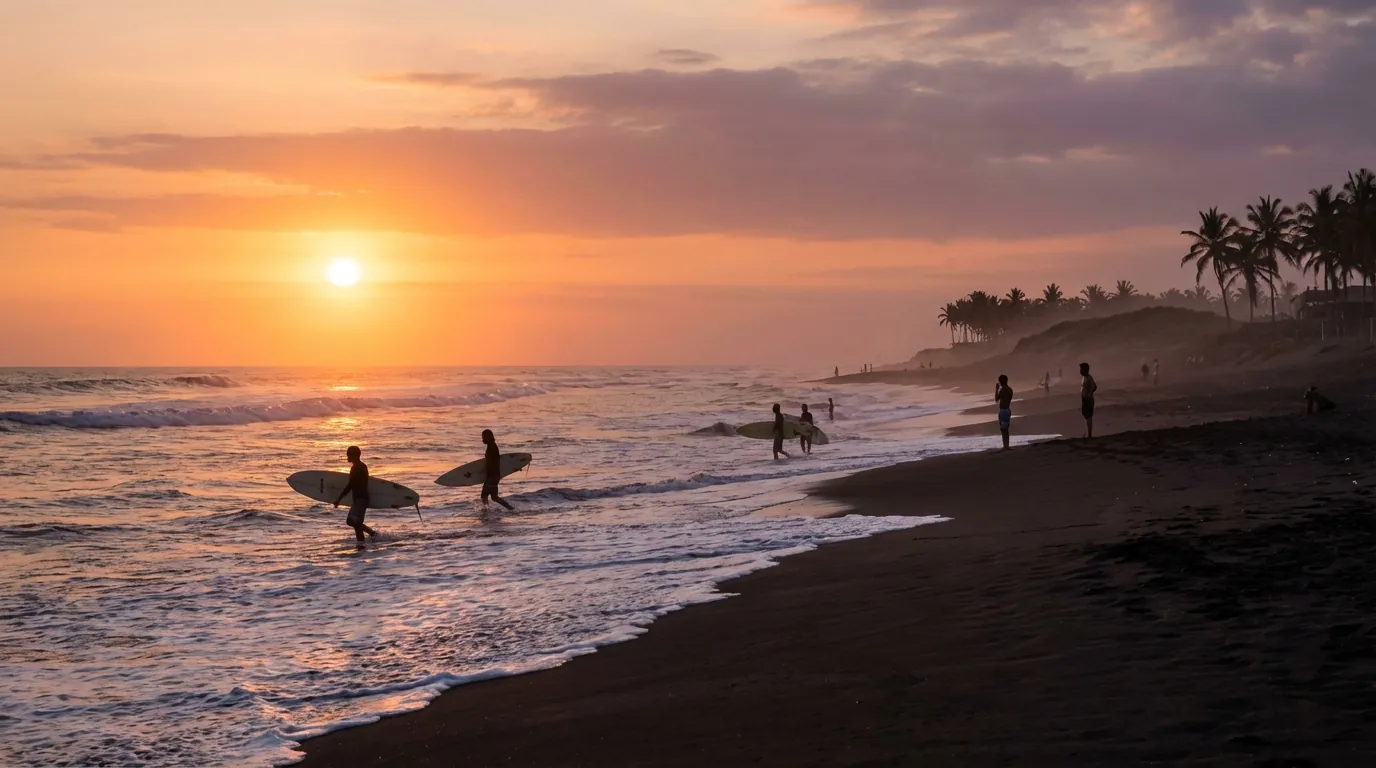
For sunsets, the sky turns into an oil painting. Because the beach faces south-southwest, you get gorgeous side-lit skies with clouds painted in every warm color imaginable. Bring your camera (or just your eyes) and park yourself on the sand around 5:30 PM.
Tips for Beach Walking
- Footwear: The black sand gets scorching hot by mid-morning. Flip-flops or sandals are a must between 10 AM and 4 PM. Barefoot is fine early morning and late afternoon.
- Swimming: The Pacific here has strong currents and a powerful shore break. Swimming is possible but exercise real caution — this isn’t a gentle swimming beach. Stay where you can touch the bottom and never swim alone.
- Distance: You can walk 3–4 km in either direction easily. There’s no shade on the beach, so bring water and sun protection for longer walks.
Yoga & Wellness: Find Your Flow by the Ocean
There’s something about the combination of ocean sounds, warm tropical air, and zero distractions that makes El Paredón a natural fit for yoga and wellness practices. Several spots in the village offer regular yoga classes, and the vibe is completely welcoming to all levels — from first-timers to seasoned practitioners.
Sessions typically happen in open-air shalas (yoga spaces) with sand floors or wooden platforms, often within earshot of the waves. Morning classes are the most popular, starting around 7:00 or 8:00 AM before the heat kicks in. You might also find sunset sessions, sound healing circles, or guided meditation offered on certain days.
What to Expect
- Style: Mostly vinyasa flow and hatha, with some restorative and yin options. Classes tend to be informal and adapted to whoever shows up.
- Cost: Q40–Q80 ($5–$10 USD) per class. Some hostels include yoga in their guest activities.
- What to bring: Most places provide mats, but bringing your own travel mat is never a bad idea. Light, breathable clothing. A towel — you will sweat.
At Sababa El Paredón, the wellness-minded atmosphere extends beyond formal classes. The whole place is designed for relaxation — think hanging chairs, ocean views, and communal spaces that make it easy to stretch, meditate, or just breathe deeply without needing a scheduled class to do it.
Guatemalan Cooking Classes: Taste the Culture
Guatemalan cuisine doesn’t get the international attention it deserves, and one of the best ways to change that — for yourself, at least — is to learn to cook it. Several local hosts and organizations in and around El Paredón offer cooking classes that teach traditional recipes using fresh, local ingredients.
What You Might Learn to Make
- Pepián: Guatemala’s national dish — a rich, slow-simmered stew made with roasted tomatoes, peppers, spices, and sesame seeds, served over chicken or pork with rice. It’s complex, deeply flavored, and nothing like anything you’ve had before.
- Tortillas de maíz: Handmade corn tortillas, patted out by hand the traditional way. Sounds simple, looks simple, is not simple. But incredibly satisfying once you get the rhythm.
- Ceviche: Pacific coast-style, made with fish caught that morning. Fresh lime, tomato, cilantro, onion, and a kick of habanero. This is about as farm-to-table (or sea-to-plate) as it gets.
- Rellenitos: Sweet plantain dumplings stuffed with black bean paste. A beloved Guatemalan street food that you’ll want to recreate at home.
- Chuchitos: Like tamales’ smaller cousin — corn masa stuffed with seasoned meat and wrapped in corn husks.
Practical Details
- Cost: Q100–Q250 ($13–$33 USD) per person, usually including all ingredients and the meal you cook.
- Duration: 2–4 hours, depending on what you’re making.
- Language: Most classes are offered in Spanish with basic English, or with bilingual helpers. Knowing some Spanish enhances the experience but isn’t required.
Ask around at Sababa El Paredón or check community boards for upcoming classes. Some are offered regularly; others are arranged on request when enough travelers are interested.
Fishing with Local Pescadores
El Paredón is, at its core, a fishing village. Long before anyone showed up with a surfboard, the families here made their living pulling fish from the Pacific and the canal. Going out with a local pescador (fisherman) is one of the most authentic and grounding experiences you can have here.
What to Expect
Fishing trips typically leave early — around 5:00 or 6:00 AM — when the sea is calmest and the fish are biting. You’ll head out in a small wooden lancha powered by an outboard motor, and depending on the trip, you might fish close to shore with hand lines or head further out for bigger catches.
Common catches include red snapper (pargo rojo), mahi-mahi (dorado), roosterfish, and various species of jack. If you catch something, the tradition is to bring it back to shore and have it cooked up at a local comedor — fried whole with rice, beans, and fresh tortillas. There is no better lunch in Guatemala.
Practical Details
- Cost: Q150–Q400 ($20–$52 USD) per person, depending on the duration and how far out you go.
- Duration: 2–5 hours.
- What to bring: Sunscreen (reef-safe, please), hat, sunglasses, water, and a strong stomach if you’re prone to seasickness — the Pacific swells can be significant.
- Experience needed: None. Your guide will bait hooks, handle the boat, and show you what to do.
This is a great activity to arrange through your hostel. Sababa El Paredón can connect you with trustworthy local fishermen who are used to working with travelers and will make the experience fun and safe.
Sunset Bonfires & Nightlife: El Paredón After Dark
El Paredón doesn’t have clubs, bars with bottle service, or late-night taco trucks. What it has is fire, stars, drinks, and good company — and honestly, that’s better.
Beach bonfires are a nightly ritual in El Paredón. As the sun drops into the ocean, someone starts stacking driftwood, a fire is lit, and people gather. Travelers from different hostels mingle, beers appear (Gallo, the national beer, is the default), guitars sometimes materialize, and the conversations range from surf stories to life philosophy to “where should I go next in Guatemala?”
What Nightlife Looks Like Here
- Hostel hangouts: Most hostels have their own bar areas where guests congregate after dark. Sababa El Paredón’s communal spaces are perfect for this — good music, cold drinks, and the kind of relaxed atmosphere where strangers become friends by the second beer.
- Beach bonfires: Spontaneous or organized, these happen several nights a week. Some hostels host bonfire nights with music and marshmallow roasting.
- Stargazing: With virtually no light pollution, the night sky in El Paredón is extraordinary. The Milky Way is visible on clear nights, and shooting stars are common. Lie on the beach, look up, and let your jaw drop.
- Movie nights: Some hostels set up projectors for outdoor movie screenings — a surprisingly cozy experience under the stars.
The “nightlife” in El Paredón usually winds down by 10 or 11 PM. People wake up early here, either for surf or for sunrise mangrove tours, so the late-night energy is mellow rather than raging. If you’re looking for all-night parties, this isn’t the spot. If you’re looking for meaningful connections and peaceful evenings, you’re in the right place.
The Art of Hammock Time: Doing Nothing, Beautifully
Here’s a controversial travel tip: sometimes the best thing to do in a place is absolutely nothing.
El Paredón is built for this. Almost every hostel and guesthouse has hammocks — swinging gently in the breeze, positioned under shade roofs with ocean views, strung between palm trees. The art of hamaca time is a legitimate pursuit here, and nobody will judge you for spending an entire afternoon swaying back and forth with a book, a podcast, or just your thoughts.
At Sababa El Paredón, the hammock game is strong. There are plenty of spots to claim your own swinging paradise, book in hand, ocean breeze on your face, with no obligation to do anything more ambitious than turning a page.
If you’re the type of traveler who fills every day with activities and checklists and “must-sees,” El Paredón will gently teach you another way. The locals aren’t in a hurry. The waves keep coming regardless. The sun will set tonight and rise again tomorrow. You might as well enjoy the hammock.
Best Reads for Hammock Time
Need book recommendations? Here are some titles that pair perfectly with an El Paredón hammock:
- The Motorcycle Diaries by Che Guevara — Latin American travel classic
- I, Rigoberta Menchú — Powerful testimony from Guatemala’s Nobel Peace Prize laureate
- The Art of Travel by Alain de Botton — Philosophy of why and how we travel
- Anything by Gabriel García Márquez — Magical realism + tropical setting = perfect fit
Photography & Golden Hour: A Photographer’s Playground
Whether you’re shooting with a DSLR or a smartphone, El Paredón is absurdly photogenic. The combination of black sand, dramatic skies, textured fishing boats, and authentic village life creates a visual feast that will have you burning through storage space.
Best Photo Opportunities
- Sunrise on the beach: The black sand reflects the early light beautifully. Look for fishing boats silhouetted against the dawn sky.
- Mangrove reflections: In the early morning, when the canal water is calm, the mangrove tunnels create perfect mirror reflections. This is the money shot.
- Turtle releases: Baby turtles on black sand with sunset light. Iconic, emotional, and visually stunning.
- Village life: Kids playing fútbol on the sand, fishermen mending nets, women making tortillas — but always ask permission before photographing people.
- Sunset skies: El Paredón sunsets are legendary. The open Pacific horizon + atmospheric moisture = insane color shows.
- Pelican diving: Brown pelicans diving into the surf at dawn. Dramatic action shots if you have a zoom lens.
- Night sky: Long exposures of the Milky Way over the ocean. You’ll need a tripod, but the results are worth it.
Photography Tips for El Paredón
- Protect your gear: Salt spray, black sand, and humidity are the enemies of cameras. Bring lens cloths, a waterproof bag, and silica gel packets.
- Golden hour is magic: The light from about 5:30–6:15 PM (dry season) is extraordinary. Plan to be on the beach for it.
- Drone note: Drones are technically legal in Guatemala but use common sense — don’t fly over people, wildlife, or the turtle nesting areas.
Wildlife Watching: What Lives Here
El Paredón sits at the intersection of multiple ecosystems — ocean, estuary, mangrove forest, and coastal scrubland — which makes it surprisingly rich in wildlife for such a small area.
Birds
Birdwatching in and around El Paredón is genuinely excellent. The mangrove canals are the prime birding habitat, but you’ll also spot species on the beach and around the village. Notable species include:
- Magnificent frigatebirds (the males with the inflatable red throat pouches)
- Brown pelicans
- Roseate spoonbills (during migration — strikingly pink)
- Royal and Caspian terns
- Various species of herons and egrets
- Ospreys
- Black skimmers
- Ringed kingfishers
Marine Life
From the beach, you can sometimes spot dolphins passing offshore, especially in the early morning. During certain seasons, humpback whales migrate along the Pacific coast (most likely December–March), though sightings from shore are rare. Sea turtles, of course, are the main marine attraction during nesting season.
Land Animals
Iguanas are everywhere — sunning on walls, branches, and rooftops. You’ll also encounter crabs (especially the tiny ghost crabs that zip across the sand), geckos, and if you’re lucky, howler monkeys in the forested areas behind the mangroves. At night, listen for the deep, guttural roar of male howlers — it sounds like a large predator but it’s just a monkey asserting its territory.
The Local Food Scene: Eat Like the Pescadores Do
El Paredón’s food scene is small but mighty. This is a fishing village, and the food reflects that — fresh seafood is king, prepared simply and served without pretense.
Where & What to Eat
Comedores (local eateries): The village has a handful of family-run comedores serving comida típica — the daily Guatemalan menu of beans, rice, tortillas, and a protein (usually fish here). A full meal at a comedor runs Q20–Q40 ($3–$5 USD). The fish is almost always caught that morning. You won’t find a fresher meal anywhere.
Hostel restaurants: Many hostels, including Sababa El Paredón, serve food that bridges local and international flavors — think fresh fish tacos, smoothie bowls, pasta, and Israeli-inspired dishes alongside Guatemalan staples. It’s a nice balance when you want variety.
Must-try dishes:
- Pescado frito entero — Whole fried fish, crispy skin, tender flesh, served with limón, rice, and a simple salad. The signature dish of the coast.
- Ceviche — Fresh raw fish “cooked” in lime juice with tomato, onion, cilantro, and chili. Best eaten immediately, on the beach, with a cold Gallo.
- Caldo de mariscos — Seafood soup loaded with fish, shrimp, clams, and vegetables in a tomato broth. Restorative after a long beach day.
- Garnachas — Fried tortillas topped with shredded meat, pickled cabbage, salsa, and cheese. Street food perfection.
- Licuados — Fresh fruit smoothies made with whatever’s in season: papaya, mango, piña, sandía. Blended with water or milk and a little sugar. Pure refreshment.
Drinking
Gallo is Guatemala’s ubiquitous lager — light, crisp, and perfectly suited to the heat. You’ll also find Victoria (a darker option), Quezalteca (aguardiente — the local sugarcane spirit, a.k.a. “Queza,” handle with care), and fresh coconut water hacked open with a machete. Many hostels mix cocktails with tropical fruits and rum or Queza.
Digital Nomad Life in El Paredón
Can you work remotely from El Paredón? Yes, with some caveats.
Wi-Fi exists in El Paredón, but it’s not Antigua or Lake Atitlán level. Speeds can be variable, and connections may drop during storms or peak usage. That said, it’s gotten significantly better in recent years, and many hostels — including Sababa El Paredón — have invested in improved connectivity for their guests.
Making It Work
- Wi-Fi: Available at most hostels. Speeds of 5–15 Mbps are typical — fine for emails, writing, and video calls (most of the time). Don’t count on uploading massive files quickly.
- Backup plan: Buy a local Tigo or Claro SIM card with a data plan. 4G coverage in El Paredón has improved, and mobile data can serve as a hotspot backup when Wi-Fi is unreliable.
- Workspace: Most hostels have communal tables and shaded areas where you can set up. The vibe is more “laptop in a hammock” than “co-working space,” which is either perfect or problematic depending on your discipline.
- Power: Bring a power strip and a surge protector. Outlets can be limited, and electrical surges happen. Keeping your devices charged is your responsibility.
- Schedule: The smartest nomads here work in the morning (7–12), take the afternoon off for activities and beach time, and do a final work session in the evening if needed. Fighting the rhythm of the place is futile.
El Paredón is ideal for 1–2 week stays for nomads who want to balance work with a genuine unplugging experience. It’s not the place for high-bandwidth work or marathon video conferencing, but for writers, designers, coaches, and anyone who can work flexibly? It’s paradise.
Volunteering Opportunities
For travelers who want to give back during their stay, El Paredón offers several volunteer opportunities rooted in real community needs.
Sea Turtle Conservation
The most well-known volunteer option. Programs typically ask for a minimum commitment of one to two weeks and involve night patrols to collect eggs, hatchery maintenance, data collection, and assisting with releases. It’s physical work — night patrols on the beach in the dark, often in the rain — but incredibly meaningful.
English Teaching
The local school welcomes volunteer English teachers. Even a few hours a week can make a difference in a community where English skills open doors to employment in tourism. No teaching certification is required, though it helps. Patience, creativity, and genuine enthusiasm for kids are the real qualifications.
Community Projects
Beach cleanups, construction projects, and environmental education initiatives pop up regularly. These are often organized by hostels or local NGOs and are open to anyone willing to pitch in, even for a single day.
How to Volunteer Responsibly
- Choose programs that are community-led or community-partnered, not run entirely by foreign organizations.
- Be realistic about your skills and time commitment. A few genuine days of help beats a week of half-hearted participation.
- Don’t take a job a local could be paid to do. Volunteering should supplement, not replace, local employment.
- Ask at Sababa El Paredón — the team knows which programs are legitimate and where help is genuinely needed.
Nearby Day Trips from El Paredón
While El Paredón itself can easily fill several days, it also makes a base for exploring a few nearby destinations.
Sipacate
The nearest town of any size, Sipacate is about 30 minutes by boat (across the canal) or a longer drive by road. It has a more developed infrastructure — small shops, a pharmacy, a market, and a few restaurants. It’s not wildly exciting, but useful for supplies and a change of scenery. The boat ride across the canal is an experience in itself.
La Antigua Guatemala
Guatemala’s colonial jewel is roughly 2.5–3 hours by road from El Paredón. While it’s too far for a casual day trip, many travelers combine El Paredón with Antigua as part of a longer itinerary. If you have a free day and don’t mind the drive, Antigua’s cobblestone streets, volcanic backdrop, and café culture make for a complete change of pace.
Escuintla & Auto Safari Chapín
About 1.5 hours inland, Auto Safari Chapín is a drive-through wildlife park with African and Guatemalan animals. It’s a good option if you’re traveling with kids or want something completely different. Not a pristine wildlife experience, but entertaining.
Monterrico
Another Pacific coast beach town, Monterrico is about an hour east by road. It’s more developed than El Paredón — more restaurants, a wider beach, and more tourists (especially Guatemalan weekend visitors). It also has its own turtle conservation programs. Worth a visit for comparison, but most travelers prefer El Paredón’s quieter, more authentic vibe.
Lake Atitlán
If you’re planning a Lake Atitlán to Pacific coast itinerary, El Paredón is the natural coastal counterpart to the highlands. The journey from Lake Atitlán to El Paredón takes about 4–5 hours via shuttle, passing through dramatic elevation changes from volcanic highlands to tropical lowlands. Many travelers spend a few days at Sababa’s Lake Atitlán location in San Pedro La Laguna before heading to the coast — it’s a perfect highland-to-beach combo.
Practical Tips: Costs, Seasons & What to Pack
Budget Breakdown
El Paredón is one of the more affordable beach destinations in Central America. Here’s what to expect:
| Expense | Budget Range (USD) |
|---|---|
| Dorm bed | $8–$15/night |
| Private room | $25–$60/night |
| Meal at comedor | $3–$5 |
| Meal at hostel restaurant | $5–$12 |
| Beer (Gallo) | $1–$2 |
| Mangrove tour | $13–$26 |
| Fishing trip | $20–$52 |
| Yoga class | $5–$10 |
| Cooking class | $13–$33 |
| Turtle release donation | $3–$7 |
Daily budget: A comfortable backpacker can get by on $25–$40 USD per day including accommodation, food, and one activity. Mid-range travelers spending on private rooms and multiple tours might spend $50–$80.
When to Visit (Seasons)
El Paredón is a year-round destination, but conditions vary:
- Dry season (November–April): Less rain, more sun, calmer seas. The most comfortable time for non-surfers. December through February is particularly pleasant with lower humidity.
- Rainy season (May–October): Afternoon downpours are common but rarely last all day. Mornings are usually clear. The upside: turtle season overlaps with the rains, vegetation is lush and green, and there are fewer tourists.
- Best overall months for non-surfers: November and December — you get the tail end of turtle season, comfortable temperatures, and the transition into dry season.
What to Pack for El Paredón
Packing for a non-surfing trip to El Paredón is straightforward:
- Lightweight, quick-dry clothing — It’s hot and humid year-round. Cotton dries slowly. Opt for synthetic or linen.
- Swimsuit(s) — At least two, so one can dry while you wear the other.
- Reef-safe sunscreen — SPF 50+. You will burn faster than you think on dark sand, which absorbs and reflects heat.
- Insect repellent — Mosquitoes and sand flies (jejenes) are present, especially near the mangroves and at dusk. DEET or picaridin-based repellents work best.
- Flashlight or headlamp — The village is dark at night. Essential for walking back from the beach after bonfires.
- Cash (Guatemalan quetzales) — There are no ATMs in El Paredón. Withdraw cash before you arrive. Some places accept USD, but quetzales are preferred.
- Waterproof phone case or dry bag — For boat tours, beach days, and unexpected rain.
- Light rain jacket — Essential during rainy season, handy even in dry season for cool evening breezes.
- Sandals and one pair of closed shoes — Sandals for daily life, shoes for any inland excursions or muddy mangrove walks.
- A good book — Wi-Fi will fail you. A book never will.
- Reusable water bottle — Many hostels have filtered water stations. Reduce plastic waste.
Getting to El Paredón
Most travelers reach El Paredón via shuttle from Antigua (2.5–3 hours, ~$15–$25 USD) or from Lake Atitlán (4–5 hours, ~$25–$35 USD). Shuttles are the easiest option and can be booked through hostels, travel agencies, or directly through Sababa. The final stretch involves crossing the Canal de Chiquimulilla by boat — a short, fun ride that signals you’re truly arriving somewhere off the beaten path.
From Guatemala City, the drive takes roughly 2–3 hours. There’s no direct public bus service to El Paredón itself, so shuttles or private transfers are the way to go.
Money & Connectivity
- Cash is king. Bring enough quetzales for your entire stay plus a buffer. The nearest ATM is in Sipacate or Escuintla.
- Wi-Fi: Available at hostels but variable. Don’t depend on it for critical work.
- Cell service: Tigo and Claro both have coverage. Buy a SIM card in Antigua or Guatemala City before arriving.
Frequently Asked Questions About El Paredón for Non-Surfers
Is El Paredón worth visiting if I don’t surf?
Absolutely. While surfing is a major draw, El Paredón offers incredible experiences for non-surfers including mangrove tours, sea turtle conservation, beach walks, yoga, cooking classes, fishing trips, and world-class sunsets. Many travelers who visit as non-surfers say it was one of the highlights of their Guatemala trip. The village’s laid-back atmosphere and natural beauty are reasons enough to visit.
How many days should I spend in El Paredón as a non-surfer?
Three to five days is the sweet spot. This gives you enough time to do a mangrove tour, participate in a turtle release (in season), take a fishing trip, enjoy beach walks and sunsets, and still have time for pure relaxation. Some travelers get hooked on the pace and end up staying a week or more. You could do a quick two-day visit, but you’d miss the point — El Paredón rewards slowing down.
Is El Paredón safe?
El Paredón is generally considered safe for travelers. It’s a small, tight-knit fishing community where most residents know each other. Standard travel precautions apply: don’t leave valuables unattended on the beach, be aware of ocean currents when swimming, and carry a flashlight at night since the village has limited street lighting. Solo travelers, including solo women, frequently visit without issues.
Can I swim in the ocean at El Paredón?
You can, but with caution. The Pacific Ocean at El Paredón has strong currents, a powerful shore break, and no lifeguards. It’s not a calm swimming beach. Wade in waist-deep water and stay where you can touch the bottom. Never swim alone, and avoid swimming after dark or after drinking. The ocean here demands respect — even experienced swimmers should be careful.
What is the best time of year to visit El Paredón for non-surfers?
November and December offer the best of both worlds — the tail end of turtle season (releases still happening) combined with the start of dry season (less rain, more sun). January through March is also excellent for weather. If sea turtles are your priority, visit between August and November. The rainy season (May–October) is less comfortable but still viable, with mornings usually clear and prices lower.
Is there an ATM in El Paredón?
No. There are no ATMs in El Paredón. The nearest ATMs are in Sipacate or Escuintla. Bring enough cash in Guatemalan quetzales to cover your entire stay, plus a buffer for unexpected expenses. Some hostels and restaurants may accept card payments, but don’t count on it. Withdraw cash in Antigua, Guatemala City, or another major town before heading to El Paredón.
How do I get from Lake Atitlán to El Paredón?
The most common route is by tourist shuttle, which takes approximately 4–5 hours and costs $25–$35 USD. Shuttles typically depart from Panajachel or San Pedro La Laguna. You can book through your hostel (Sababa offers booking assistance at both their Lake Atitlán and El Paredón locations), a travel agency, or online. The journey passes through the highlands and descends to the Pacific lowlands, with the final leg involving a short boat crossing of the Canal de Chiquimulilla.
Are there mosquitoes in El Paredón?
Yes, mosquitoes are present, particularly near the mangroves and during dusk and dawn. Sand flies (jejenes or no-see-ums) can also be bothersome, especially during and after rain. Bring DEET or picaridin-based insect repellent, and consider wearing long sleeves and pants in the evenings. Sleeping under a mosquito net (provided by most hostels) is recommended. The risk of mosquito-borne illness is low but not zero — consult your doctor about antimalarial medication before traveling.
Is El Paredón suitable for families with children?
El Paredón can work for families, but it’s better suited to older children and teenagers who can handle basic conditions (no air conditioning, limited amenities) and appreciate nature-based activities. The turtle releases are magical for kids. The main concerns are ocean safety (strong currents), limited medical facilities, and the heat. Families with very young children might find the rustic infrastructure challenging. That said, adventurous families with kids over 8 or so will find it memorable.
What should I not miss in El Paredón?
The three unmissable experiences for non-surfers are: (1) a mangrove canal tour — preferably by kayak at sunrise, (2) a sea turtle release at sunset during nesting season (July–December), and (3) a freshly-caught fish lunch at a local comedor. Beyond those, simply being present for the sunsets, allowing yourself unstructured hammock time, and connecting with fellow travelers at beach bonfires will round out an unforgettable visit.
Final Thoughts: El Paredón Without a Surfboard
Here’s the truth about El Paredón: the waves are great, but they’re not the point.
The point is the baby turtle you held in your palm that’s now somewhere in the Pacific Ocean, growing. It’s the silence of a mangrove tunnel at 6 AM with nothing but bird calls and the drip of your paddle. It’s the taste of a whole fried fish that was swimming three hours ago. It’s the conversation around a bonfire with someone from a country you’ve never been to. It’s the hammock, the book, the sunset, the stars.
El Paredón strips away the noise and gives you something increasingly rare in travel: an authentic, uncommercialized, deeply peaceful place where the biggest decision you’ll make all day is whether to walk left or right on the beach.
You don’t need to surf to love it here. You just need to show up, slow down, and let the place do its thing.
Ready to experience El Paredón? Sababa El Paredón is the perfect home base — comfortable, welcoming, and connected to everything the village has to offer. The team can help you arrange mangrove tours, fishing trips, turtle releases, and whatever else catches your eye. And when you’re done with the coast, hop over to Sababa’s Lake Atitlán location in San Pedro La Laguna for the highland chapter of your Guatemala adventure.
Have questions about visiting El Paredón? Drop us a message — we’re happy to help you plan your non-surfing (or surfing!) Pacific coast escape.