El Paredón Surf Guide: Waves, Season, and Where to Stay
# El Paredón Surf Guide: Waves, Season, and Where to Stay
El Paredón is Guatemala’s surf town — a raw, salty village on the Pacific coast where black sand meets powerful swells and the sunsets never disappoint. It’s not Bali. It’s not Costa Rica. It’s rougher, quieter, and more real. Here’s what you need to know before you paddle out.
## The Waves
### Main Break: El Paredón Beach Break
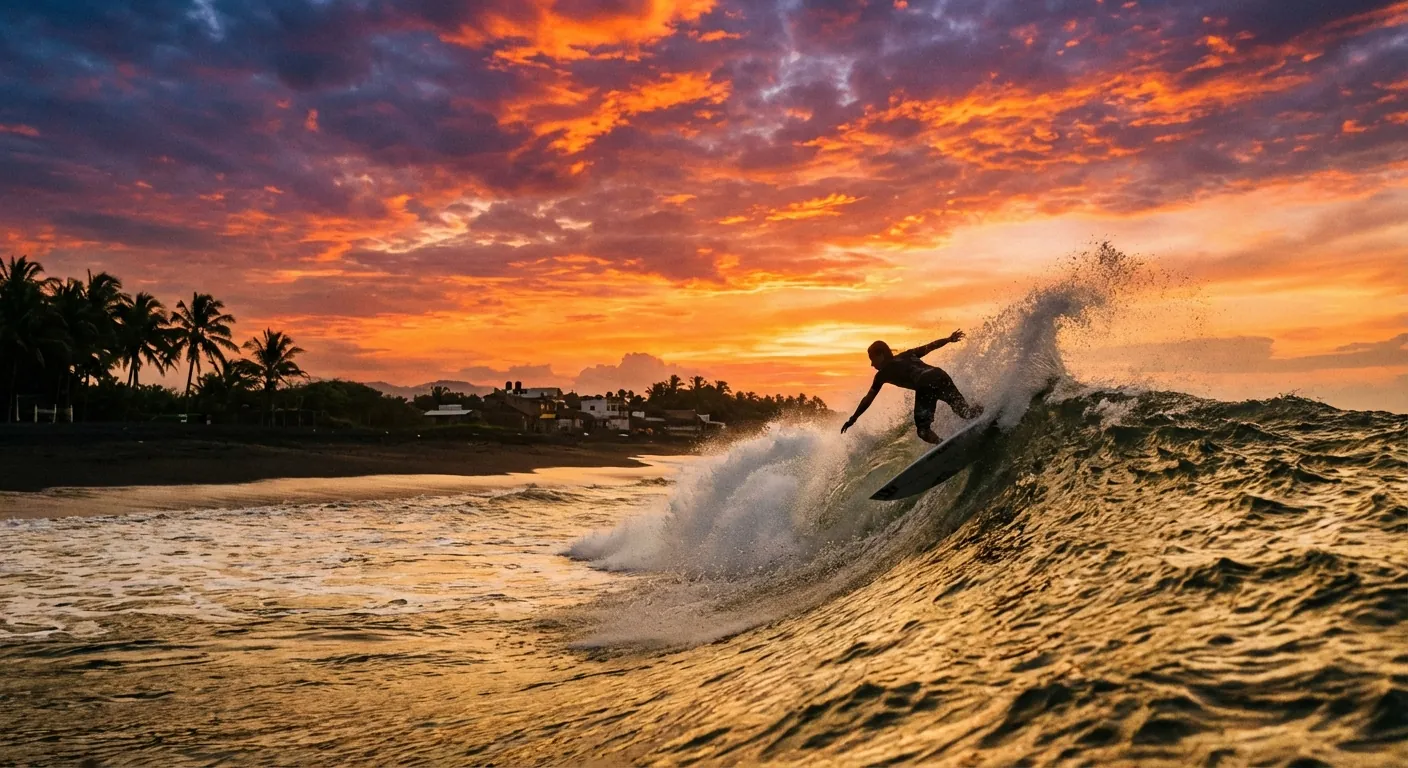
El Paredón’s main break is a fast, powerful beach break that produces hollow lefts and rights. The black volcanic sand creates steep, punchy waves that barrel on good days.
**Wave characteristics:**
– **Type**: Beach break (sand bottom).
– **Direction**: Lefts and rights, with lefts generally longer.
– **Size range**: 3-8 feet (overhead+ during peak season).
– **Best tide**: Mid to high tide. Low tide gets shallow and closeout-prone.
– **Bottom**: Black volcanic sand — forgiving on wipeouts.
– **Current**: Strong rip currents, especially during larger swells. Respect the ocean.
### Skill Level
El Paredón is **not a beginner wave**. The shore break is heavy, currents are strong, and the waves have real power. That said:
– **Beginners**: Can learn in the inside whitewater with a surf school. Conditions are best early morning when it’s smaller.
– **Intermediate**: This is your playground. Waist-to-chest high days are frequent and fun.
– **Advanced**: Overhead swells produce fast barrels and powerful walls. The wave has juice.
## Best Time to Surf El Paredón
### Peak Season: March – October
This is when the south swells hit the Pacific coast of Guatemala consistently. The biggest, most powerful waves arrive between May and September.
| Month | Swell Size | Consistency | Crowd |
|—|—|—|—|
| March–April | 3-5 ft | Moderate | Low |
| May–June | 4-7 ft | High | Low-Medium |
| July–August | 5-8 ft | Very High | Medium |
| September–October | 4-7 ft | High | Low |
### Off-Season: November – February
Smaller, less consistent swells. Still surfable — you’ll find waist-high waves on most days, and the occasional north swell can produce fun conditions. This is the best time for beginners.
### Daily Conditions
– **Dawn patrol (5:30–8:00 AM)**: Cleanest conditions. Glassy or light offshore winds.
– **Mid-morning (8:00–11:00 AM)**: Still good. Wind starts picking up.
– **Afternoon**: Onshore winds chop up the surface. Not ideal unless there’s a big swell running.
## Surf Schools & Board Rentals
Several hostels and schools offer lessons and rentals:
– **Lessons**: Q150–Q250 for a 1.5–2 hour session with a local instructor. Includes board and rash guard.
– **Board rental**: Q75–Q150 per day depending on the board type.
– **Boards available**: Longboards, funboards, and a few shortboards. Bring your own if you’re particular.
**Tips:**
– Local instructors know the currents intimately — trust their guidance.
– Morning lessons are best. The ocean is calmer and the heat is manageable.
– Reef booties aren’t necessary (sand bottom), but a rash guard is smart — the sun is brutal.
## Where to Stay
### Budget (Under Q200/night)
– **Hostel-style dorms** with surf packages. Basic but functional. Most include breakfast and are steps from the beach.
– Hammock spots and camping options available for the truly budget-conscious.
### Mid-Range (Q200–Q600/night)
– **Boutique surf lodges** with private rooms, pools, and restaurant on-site. This is the sweet spot — comfortable without losing the rustic vibe.
– Look for places that include surf guiding and board storage.
### Splurge (Q600+/night)
– **Eco-lodges and private bungalows** with air conditioning, ocean views, and premium amenities. Perfect for couples or anyone who wants comfort after a long session.
## Getting to El Paredón
### From Antigua Guatemala
– **Shuttle**: 2.5–3 hours. Multiple operators run daily shuttles (Q100–Q200 per person). The most common and convenient option.
– **Private transfer**: Q400–Q700 for a car. Faster and door-to-door.
### From Guatemala City
– **Drive**: ~2.5 hours via Escuintla. Take CA-9 south to Escuintla, then follow signs toward Sipacate/El Paredón.
– **Shuttle**: 3–3.5 hours from Zone 1 or Zone 10.
### From Lake Atitlán
– **Shuttle to Antigua** (2.5–3 hours), then **shuttle to El Paredón** (2.5–3 hours). Plan for a full travel day or overnight in Antigua.
### The Last Stretch
The final 30 minutes to El Paredón is on a dirt/gravel road through mangroves. It’s bumpy but passable year-round. The journey is part of the charm.
## Beyond Surfing
### Sea Turtle Conservation
El Paredón is a major nesting site for olive ridley and leatherback sea turtles. From July to December, you can volunteer at local hatcheries — releasing baby turtles into the ocean at sunset is one of the most moving experiences in Guatemala.
### Mangrove Boat Tours
Explore the mangrove estuary by boat. The waterways are home to herons, iguanas, kingfishers, and crocodiles. Tours run Q75–Q150 per person and last about 1.5 hours.
### Fishing
Join local fishermen for an early-morning fishing trip. You’ll see how the community has lived for generations — and you might catch dinner.
### Sunsets
The Pacific sunsets from El Paredón are world-class. The black sand, the open horizon, the colors — it’s the kind of sunset that makes you put your phone down.
## What to Pack
– **Reef-safe sunscreen** (SPF 50+). The equatorial sun is relentless.
– **Rash guard or surf shirt**.
– **Light, quick-dry clothing**.
– **Cash** — El Paredón has limited ATM access. Bring enough quetzales for your stay.
– **Mosquito repellent** — the mangroves breed mosquitoes, especially at dusk.
– **Your own board** if you have specific preferences. Rental boards are decent but limited.
– **A book** — for the downtime between sessions.
## Practical Tips
– **Cash is king**: very few places accept cards. Bring enough from Antigua or Guatemala City.
– **Water**: drink bottled or filtered water only.
– **Electricity**: power outages happen. Bring a power bank.
– **Internet**: available at most hostels, but don’t expect fast speeds.
– **Language**: basic Spanish goes a long way. The locals are friendly and patient.
– **Safety**: El Paredón is a small, tight-knit community. It’s safe, but don’t leave valuables on the beach.
## FAQ
### Is El Paredón good for beginner surfers?
In the right conditions (small swell, morning, with an instructor), yes. But it’s not the easiest place to learn. The waves have power even when they’re small.
### How long should I stay?
3–5 days is the sweet spot. Enough time to surf, release turtles, and decompress.
### Is there nightlife?
Not really. A few hostels have bars with music, but El Paredón is about early mornings and early nights. Bring your own entertainment.
### Can I surf year-round?
Yes, but peak season (March–October) delivers the best and most consistent waves.
### Are there sharks?
Shark encounters are extremely rare on Guatemala’s Pacific coast. The main hazards are currents and the shore break.
## Final Thoughts
El Paredón is surfing stripped down to its essentials: powerful waves, warm water, black sand, and not much else. That’s exactly the point. If you want resort comforts and beachside cocktails, look elsewhere. If you want to surf until your arms give out and fall asleep to the sound of the ocean — welcome home.