Horseback Riding at Lake Atitlán: Your Complete Guide to Equestrian Adventures in Guatemala
Horseback Riding at Lake Atitlán: A Truly Immersive Way to Explore Guatemala's Highland Gem
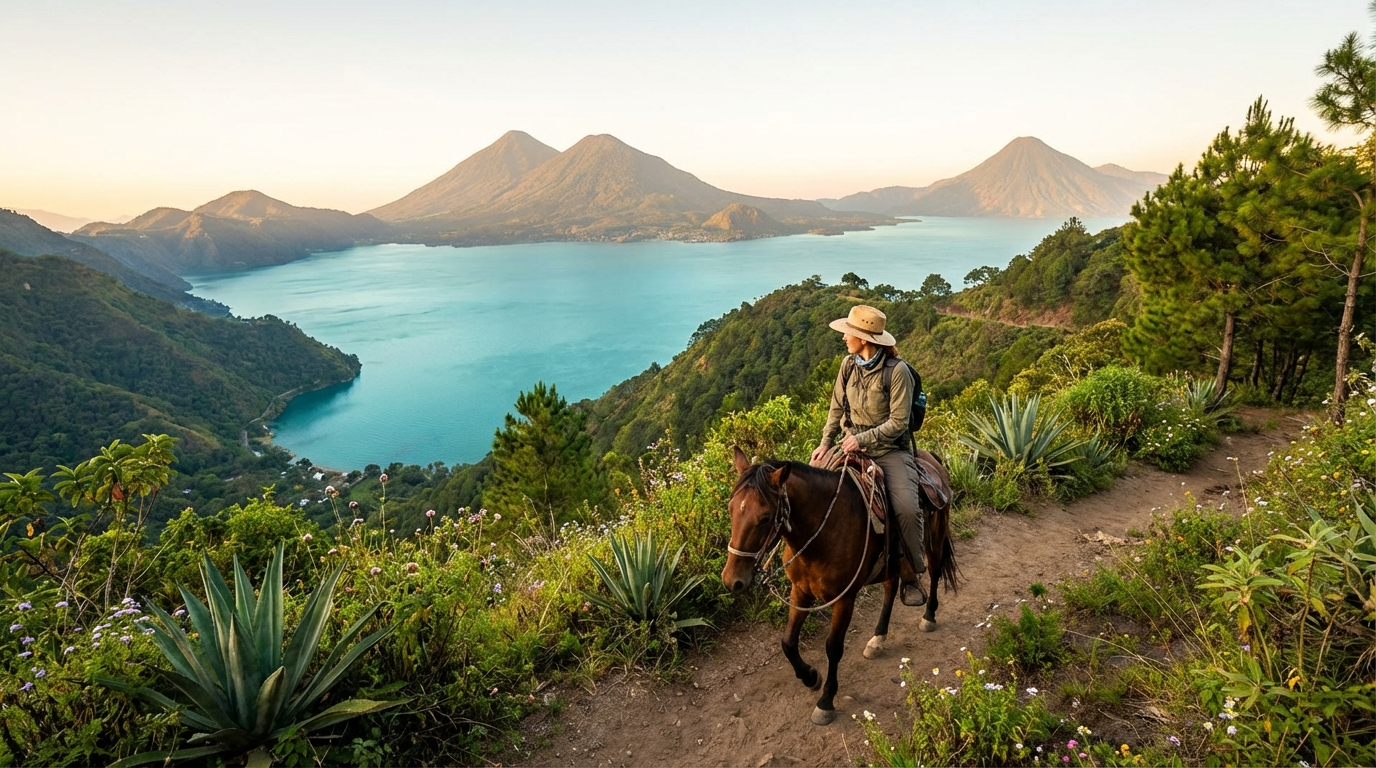
Most visitors to Lake Atitlán arrive by boat, tuk-tuk, or shuttle bus. But there is another way to experience this extraordinary volcanic landscape — one that has been used by the Maya for centuries. Horseback riding around Lake Atitlán offers a pace that no motorized vehicle can match: slow enough to notice the wild orchids climbing ancient coffee trees, the wood smoke drifting from village kitchens, the way the lake changes color from turquoise to obsidian as clouds pass over the three volcanoes.
Guatemala's highland terrain was made for horses. Ancient mule paths weave between indigenous villages, coffee fincas, and cloud forest edges that no road will ever reach. From San Pedro La Laguna to Santa Catarina Palopó, from the slopes of Volcán San Pedro to the ridge trails above San Marcos La Laguna, the region is threaded with routes that reward equestrian travelers with views and cultural encounters that most tourists never access.
Whether you're an experienced rider looking for a full-day backcountry adventure or a first-timer wanting a gentle one-hour lakeside trot, this guide covers everything you need to know — where to ride, what to expect, how much it costs, and how to make the most of horseback riding at Lake Atitlán.
Why Lake Atitlán Is Exceptional for Horseback Riding
Altitude, terrain, and culture combine at Lake Atitlán to create an equestrian environment unlike anywhere else in Central America. Here's why riders keep coming back:
The Landscape Is Breathtaking
Lake Atitlán sits at 1,560 meters (5,100 feet) above sea level, ringed by three volcanoes — Volcán Atitlán (3,537m), Volcán Tolimán (3,158m), and Volcán San Pedro (3,020m). The surrounding hillsides drop steeply toward the water, creating dramatic trail environments where riders look down over the turquoise lake from forested ridges. On clear mornings, the views are genuinely unforgettable.
Authentic Maya Village Culture
Trail routes naturally pass through or near the 12 distinct indigenous villages around the lake, each with its own Maya Tz'utujil or Kaqchikel language dialect, traditional weaving patterns, and local customs. On horseback you move through these communities at a natural, respectful pace — stopping to watch weavers at their backstrap looms, greeting farmers returning from milpa fields, passing roadside shrines decorated with flowers and incense.
Coffee and Cacao Country
The highlands around Lake Atitlán produce some of Guatemala's finest specialty coffee. Trail rides frequently wind through working coffee fincas where the bushes grow under shade trees in an almost forest-like setting. During harvest season (October through February), you may pass pickers filling woven baskets with bright red coffee cherries — one of the most photogenic sights in all of Guatemala.
Year-Round Riding Weather
The dry season (November through April) offers ideal conditions — clear skies, no mud on the trails, and cool highland temperatures that are comfortable for both riders and horses. During the green season (May through October), morning rides before midday rains are especially lush and vivid. The lake's volcanic basin generates its own microclimate, and temperatures rarely exceed 24°C (75°F) or drop below 10°C (50°F) at lake level, making year-round riding genuinely pleasant.
Best Horseback Riding Routes Around Lake Atitlán
1. San Pedro La Laguna to San Juan La Laguna Trail
This is the most popular beginner-friendly route and for good reason. The path between San Pedro and neighboring San Juan La Laguna winds through coffee plantations and offers sweeping views of the lake. The distance is roughly 3 km each way, making a relaxed round trip of about 2–3 hours. San Juan is famous for its women's weaving cooperative and natural dye workshops, so combining a trail ride with a village visit creates a rich half-day experience. Most stables in San Pedro offer this route at an introductory price.
2. Volcán San Pedro Lower Slopes
For riders who want more of an adventure, the lower flanks of Volcán San Pedro offer forest trails through cloud forest edges with howler monkeys overhead and hummingbirds at every flowering bush. This is typically a 4–5 hour ride that ascends several hundred meters before looping back to San Pedro. The trails are steeper and require at least basic riding experience, but the views from the forest ridge down over the lake and surrounding volcanoes justify every meter of climb. Most operators require prior riding experience and limit group size to 4–6 riders for safety on these narrower trails.
3. Santa Cruz La Laguna Ridge Trail
Santa Cruz La Laguna is accessible only by boat from Panajachel or San Marcos, which keeps it wonderfully quiet. The village sits on a dramatic hillside, and the trails above it run along a ridge with panoramic views that take in the full length of the lake. This is a lesser-known horseback riding option that usually needs to be arranged in advance through a local guide. The reward is extraordinary — empty trails, authentic village life, and some of the most dramatic scenery in the Atitlán basin.
4. Panajachel to Santa Catarina Palopó
This gentle route follows the eastern lakeshore from Panajachel toward Santa Catarina Palopó, a village famous for its intricately woven huipiles (blouses) in vivid blues and purples. The trail skirts lakeside reeds and offers close-up water-level views of the lake that boat travelers don't get. It's a relaxed 1.5–2 hour ride appropriate for all levels and makes an excellent first horseback riding experience in Guatemala. Several operators in Panajachel offer this excursion, usually including a brief stop in Santa Catarina.
5. San Marcos La Laguna to San Pablo La Laguna
San Marcos is known as Lake Atitlán's spiritual and wellness hub, but the hillside above it hides excellent trail riding territory. The route to San Pablo La Laguna passes through dense avocado and coffee groves, crossing small streams and indigenous farming plots along the way. This route offers a wonderful contrast between the laid-back hippie vibe of San Marcos at the start and the entirely traditional Maya atmosphere in San Pablo at the end. Guides who know this trail can point out traditional medicinal plants along the way — an added dimension most riders don't expect.
What to Expect: A Typical Horseback Riding Experience at Lake Atitlán
Meeting the Horses
Most horses used for trail riding around Lake Atitlán are mixed-breed working horses — sturdy, sure-footed animals that have been navigating steep volcanic terrain their entire lives. They are typically calm and well-suited to riders of all experience levels. Expect smaller horses than North American or European riding school horses; the mountain breeds here tend to be compact and agile, built for narrow trails rather than open flat country.
Reputable operators will give you time to meet your horse before mounting, make sure the saddle fits properly, and assess your experience level before selecting a suitable animal. Don't hesitate to ask for adjustments or a different horse if something doesn't feel right.
Equipment and Saddles
Most stables use Western-style saddles or a local variant, which provides a comfortable, secure seat for trail riding. Helmets are not universally provided but can usually be requested — bring your own if you're particular about fit. Riding boots or sturdy closed-toe shoes are strongly recommended; sandals and flip-flops are not appropriate for trail riding on steep terrain.
Group Sizes and Guides
Reputable operators limit group sizes to maximize safety and enjoyment. Smaller groups (2–6 riders) mean better guide attention and less trail impact. All legitimate operators provide an experienced local guide who knows the terrain, speaks both Spanish and enough English to communicate effectively, and can handle any situation that arises on the trail.
Physical Requirements
Most Lake Atitlán trail rides have no strict fitness requirements for the easier routes, but riders who are significantly overweight (typically over 90kg / 200 lbs) may be asked to ride larger horses or may not be accommodated — a practical consideration worth confirming when booking. Steeper volcano-flank rides benefit from basic fitness since you may need to walk short sections where the trail is too narrow or steep for riding.
How Much Does Horseback Riding Cost at Lake Atitlán?
Prices vary depending on duration, route difficulty, group size, and operator quality. Here are realistic 2026 price ranges:
- 1-hour gentle ride (lakeside/village trail): Q150–Q200 per person (approximately $20–$26 USD)
- 2–3 hour intermediate ride (coffee finca / village to village): Q250–Q400 per person ($33–$52 USD)
- Half-day ride (4–5 hours, volcano slopes or ridge trails): Q500–Q700 per person ($65–$90 USD)
- Full-day ride with lunch and village stops: Q800–Q1,200 per person ($105–$155 USD)
These prices typically include a guide and horse. Always confirm what's included before booking: some operators include water, snacks, or a simple lunch on longer rides; others don't. Tips for your guide (Q50–Q100 for a half-day) are standard practice and greatly appreciated.
Booking directly with local operators in San Pedro La Laguna or through your accommodation generally yields better prices than booking through Antigua-based tour agencies. That said, quality varies — ask your guesthouse or resort for personal recommendations.
When Is the Best Time for Horseback Riding at Lake Atitlán?
Dry Season (November–April)
The dry season is ideal for horseback riding. Trails are firm, visibility is excellent, and the mornings offer crisp highland air and brilliant sunlight. March and April can be slightly dusty on heavily-used paths, but generally this is the most comfortable riding period. January and February are particularly magical — clear skies, cooler temperatures, and the coffee harvest in full swing.
Green Season (May–October)
The rainy season transforms the landscape into vivid shades of emerald and jade — stunning for photography and for experiencing the lake at its lushest. Trail rides are best scheduled in the morning before afternoon rains typically arrive (usually between 1:00 and 5:00 PM). Trails can be muddy after heavy rain, so check with your operator before heading out. A light rain jacket is worth bringing regardless of the season.
Horseback Riding Safety Tips
- Choose reputable operators. Ask your accommodation for recommendations. Look for operators who allow you to see where horses are kept before committing. Healthy, well-cared-for horses are a sign of a responsible business.
- Wear appropriate footwear. Closed-toe shoes with a small heel are ideal. Sandals and flip-flops can slip through stirrups dangerously.
- Apply sunscreen. High-altitude equatorial sun is intense even on cloudy days. Apply before you mount up; reapplying while on horseback is awkward.
- Stay hydrated. Bring a water bottle. The highland air is dry and rides are more physical than they might appear.
- Listen to your guide. Local guides know the terrain and the individual horses. Follow their instructions, especially on steep descents and narrow sections.
- Be honest about your experience level. Overestimating your riding ability on steep volcanic terrain is genuinely dangerous. Beginner routes are still beautiful — there's no need to tackle advanced trails before you're ready.
- Avoid riding alone. Always ride with a guide. Trail conditions, loose animals on the path, and sudden weather changes are manageable with an experienced local alongside you.
Combining Horseback Riding with Other Lake Atitlán Experiences
Horseback riding pairs beautifully with other activities around the lake. Here are some popular combinations:
Ride and Kayak
Take a morning trail ride from San Pedro along the Volcán slopes, return to town for lunch, then rent a kayak for an afternoon paddle on the lake. This gives you two completely different perspectives on the same landscape — the bird's-eye view from the hillside and the water-level intimacy of paddling between villages.
Ride and Weaving Workshop
Combining a horse ride to San Juan La Laguna with a visit to one of the village's renowned weaving cooperatives makes a deeply satisfying cultural day. You'll travel in roughly the same manner as local villagers have for generations, then spend time learning about the intricate backstrap loom traditions that have defined Tz'utujil Maya identity for centuries.
Sunrise or Sunset Rides
A select few operators offer sunrise rides that depart before dawn, reaching viewpoints just as the lake illuminates below and the volcanoes emerge from mist. Sunset rides along the Panajachel–Santa Catarina route, timed to catch golden hour on the water, are among the most romantic experiences Lake Atitlán offers. Book these in advance as they fill quickly.
Multi-Day Riding Itineraries
For serious equestrian travelers, multi-day rides that circle a portion of the lake — stopping at different villages each night and exploring a different trail section each day — are possible to arrange through specialized operators. These typically require 3–5 days, advance planning, and a moderate budget, but they offer an immersive experience that no single-day activity can match.
Responsible Horseback Riding at Lake Atitlán
Tourism pressure on Lake Atitlán has grown substantially in recent years. Choosing responsible operators matters for both animal welfare and community impact.
Animal welfare: Choose stables that keep horses in good body condition, provide adequate food and water, and limit working hours. Horses that appear underweight, have visible sores from poorly fitting tack, or are visibly distressed are signs of poor welfare standards. Walk away and report concerns to your accommodation.
Environmental respect: Stay on established trails. Don't encourage guides to shortcut through private agricultural land or culturally sensitive areas. Carry out any trash and avoid disturbing wildlife, particularly nesting birds during March–May.
Community benefit: Booking with local guides from the lakeside villages directly — rather than through large outside operators — ensures that more of your spending stays in the community. Ask your guesthouse about locally-owned stables.
Frequently Asked Questions
Do I need riding experience for horseback riding at Lake Atitlán?
No — most operators offer gentle routes that are suitable for complete beginners. Short 1–2 hour village or lakeside rides require no prior experience. For longer rides on steeper terrain (volcano slopes, ridge trails), some basic riding experience is helpful but not always required with a good guide.
What should I wear for horseback riding at Lake Atitlán?
Long pants are recommended to avoid saddle friction. Closed-toe shoes or boots with a small heel are essential — flat-soled shoes can slip through stirrups. A light jacket is useful for morning rides at altitude. Sunscreen and a hat are strongly recommended. Leave sandals, flip-flops, and loose-flowing skirts behind.
Is horseback riding safe at Lake Atitlán?
With a reputable operator and a knowledgeable local guide, horseback riding at Lake Atitlán is safe for most healthy adults. The horses used for trail riding are experienced, calm mountain animals. The main risks are falls on steep terrain (mitigated by choosing appropriate routes for your experience level) and sun exposure. Follow your guide's instructions and you'll have a safe, wonderful experience.
Can children ride horses at Lake Atitlán?
Yes — children aged approximately 6 and up can typically participate in gentle guided rides. Many operators allow younger children to ride in front of an adult on the same horse. Confirm age and weight minimums directly with your chosen operator when booking. Children should always wear helmets.
Where is the best place to book horseback riding around Lake Atitlán?
San Pedro La Laguna has the highest concentration of horseback riding operators and the widest range of routes. Panajachel also has operators for the eastern lakeshore routes. The best approach is to ask your accommodation (guesthouse, boutique hotel, or resort) for personal recommendations — staff who live locally know which operators are responsible and which to avoid.
How far in advance should I book?
For standard 1–3 hour rides, same-day or next-day booking is usually possible. For sunrise/sunset rides, full-day excursions, or rides during Semana Santa (Holy Week) and the December holiday period, book at least 2–3 days ahead. Multi-day riding itineraries require at least 1–2 weeks advance planning.
Are horseback riding tours available year-round at Lake Atitlán?
Yes — horses and guides operate year-round. During the rainy season (May–October), morning rides are best as afternoon rains can make trails slippery. During the dry season (November–April), all-day rides are comfortable. Some operators scale back availability during the heaviest weeks of rainy season (August–September); confirm availability when booking.
Getting to Lake Atitlán from Sababa Resort
Sababa Resort sits at the heart of Guatemala's two signature travel destinations — Lake Atitlán and El Paredon on the Pacific coast. From the resort, reaching Lake Atitlán for a horseback riding adventure is straightforward: a private transfer or shared shuttle from El Paredon to Panajachel takes approximately 3.5–4 hours, followed by a short boat crossing to San Pedro La Laguna or any of the other lakeside villages.
Many guests combine a beach stay at Sababa with a 2–3 day extension to Lake Atitlán — experiencing Guatemala's Pacific surf and wildlife, then heading inland to the volcanic highlands for cultural immersion, mountain hiking, and horseback riding. It's a contrast that captures two completely different faces of Guatemala, and it's one of the most rewarding itineraries the country offers.
Ask our team at Sababa Resort about transport options and recommended accommodations at Lake Atitlán — we're happy to help piece together a seamless Guatemala journey that includes the best of both worlds.
Final Thoughts: Saddle Up and See Atitlán Differently
The boat crossing from Panajachel to San Pedro is iconic. The kayak paddle at dawn is unforgettable. The sunrise from the volcano summit is transcendent. But there is something particular about experiencing Lake Atitlán on horseback — moving at the pace of a walking animal through landscapes where horses have carried Maya people and their goods for centuries — that connects you to this place in a way that faster, modern travel simply can't replicate.
Whether you ride for an hour or a full day, whether you're a seasoned equestrian or sitting in a saddle for the first time, the highlands of Lake Atitlán will reward you. The trails are here. The horses are ready. The only question is which direction you want to ride.