Lake Atitlán + El Paredón: The Ultimate 2-Week Guatemala Itinerary
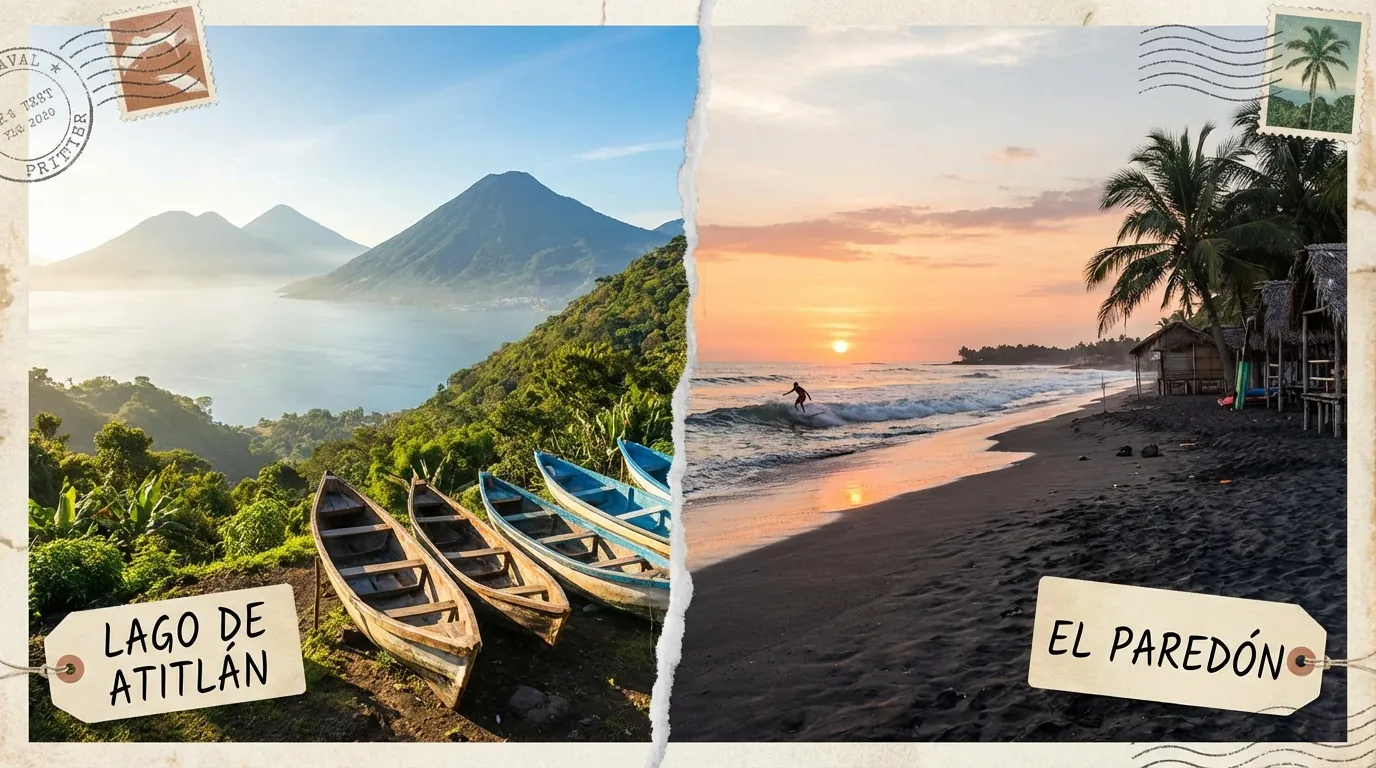
Want the best of both worlds in Guatemala? This 14-day itinerary combines the mystical highlands of Lake Atitlán with the surf and sand of El Paredón on the Pacific coast. Go from volcanic lake views and Maya villages to black sand beaches and sea turtle releases—all in one unforgettable trip.
What makes this route special? Sababa Resort has properties at both locations, making the lake-to-beach journey seamless. We’ve helped hundreds of travelers make this transition, and this guide shares everything we’ve learned.
This itinerary is perfect for travelers who want diversity—culture and adventure at the lake, followed by surf and relaxation at the beach. It’s also ideal for those who can’t decide between Guatemala’s two most contrasting landscapes. Why choose when you can have both?
- Why Combine Lake + Beach
- Itinerary Overview
- Days 1-2: Arrival & San Pedro Acclimatization
- Days 3-5: Lake Exploration
- Days 6-7: San Pedro Deep Dive
- Day 8: Transfer to El Paredón
- Days 9-12: Beach Life, Surf & Wildlife
- Days 13-14: Final Days & Departure
- Complete Budget Breakdown
- Packing List for Both Locations
- Itinerary Variations
- Essential Tips
- Sustainable Travel
- Lake vs Beach Comparison
- Frequently Asked Questions
- Traveler Testimonials
- Related Guides
Why Combine Lake Atitlán + El Paredón
Guatemala packs incredible diversity into a small country. Lake Atitlán and El Paredón represent two completely different experiences—and together, they create the ultimate Guatemala adventure.
Lake Atitlán: Mountain Magic
- Elevation: 1,560m (5,118 ft) in the cool highlands
- Landscape: Crystal-clear lake surrounded by three volcanoes
- Culture: 12 Maya villages with living traditions
- Vibe: Backpacker social scene meets indigenous authenticity
- Activities: Volcano hikes, kayaking, yoga, Spanish schools, village exploration
- Weather: Cool mornings/evenings (15-20°C), warm days (25-28°C)
El Paredón: Pacific Paradise
- Elevation: Sea level
- Landscape: Black sand beaches, mangrove channels, open ocean
- Culture: Small fishing village turned surf destination
- Vibe: Laid-back beach life, surfer community, off-the-beaten-path
- Activities: Surfing, turtle releases, mangrove tours, beach lounging
- Weather: Hot and humid (28-35°C), tropical breezes
The Contrast
| Factor | Lake Atitlán | El Paredón |
|---|---|---|
| Temperature | Cool highlands | Hot tropical coast |
| Water | Freshwater lake | Pacific Ocean |
| Main activity | Hiking & culture | Surfing & wildlife |
| Evening vibe | Bars & nightlife | Beach bonfires & early nights |
| Tourist level | Well-established | Emerging destination |
| Best for | Active exploration | Relaxation & surf |
The combination works beautifully: spend the first week being active and social at the lake, then decompress with surf and sea for the second week. By the end, you’ll feel like you’ve experienced two different countries.
Who Is This Itinerary For?
This route is perfect for:
- Adventure seekers who want variety—hiking AND surfing
- Couples wanting romance in two stunning settings
- Solo travelers who enjoy social hostels AND beach tranquility
- First-time Guatemala visitors wanting a comprehensive experience
- Digital nomads testing different work environments
- Anyone who can’t choose between mountains and beach
The Sababa Advantage
What makes this itinerary uniquely easy is that Sababa Resort operates at both locations. This means:
- Seamless transfers: Our shuttle connects the properties directly
- Consistent quality: Same hospitality standards at both locations
- Local knowledge: Staff at both properties can recommend activities, restaurants, tours
- Community continuity: The traveler community overlaps—make friends at the lake, find them again at the beach
- Simplified booking: One reservation can cover your entire trip
Itinerary Overview
Here’s the 14-day journey at a glance:
| Days | Location | Focus |
|---|---|---|
| 1-2 | San Pedro La Laguna | Arrival, acclimatization, orientation |
| 3-5 | Lake Atitlán villages | Exploration, day trips, adventure |
| 6-7 | San Pedro La Laguna | Deep dive activities, nightlife |
| 8 | Transfer day | Lake to beach journey |
| 9-12 | El Paredón | Surf, beach, wildlife, relaxation |
| 13-14 | El Paredón / Departure | Final beach time, return to airport |
Days 1-2: Arrival & San Pedro Acclimatization
Day 1: Guatemala City → Lake Atitlán
Morning/Afternoon:
- Arrive at La Aurora International Airport (GUA)
- Clear immigration, get cash from ATM, buy a Tigo SIM card
- Pre-booked shuttle to San Pedro La Laguna (4-5 hours)
- Enjoy the scenic journey through the highlands
Evening:
- Check into Sababa Resort
- Rest and recover from travel
- Casual dinner at a lakeside restaurant
- Early night—you’ll want energy for the days ahead
Tip: If your flight arrives late, consider staying one night near the airport or in Antigua, then traveling to the lake fresh in the morning.
What to Do During the Shuttle Ride
The 4-5 hour journey from Guatemala City to San Pedro passes through stunning scenery. Here’s how to make the most of it:
- Stay awake: The views—especially the lake reveal—are worth seeing
- Window seat: Ask for the right side for best volcano views descending to the lake
- Charge devices: Some shuttles have USB ports
- Meet fellow travelers: Your shuttle-mates often become lake friends
- Download content: Cell service is spotty through the mountains
Day 2: San Pedro Orientation
Morning:
- Sleep in, enjoy a leisurely breakfast at Sababa
- Explore San Pedro on foot—both docks, the market, main streets
- Get your bearings and orient yourself to the town layout
Afternoon:
- Walk to Cerro Tzankujil Nature Reserve (15 min from town)
- Hike the short trails to viewpoints
- Swim from the dock or try cliff jumping
- Return for late lunch
Evening:
- Watch sunset from Bar Sublime’s dock
- Dinner at a San Pedro restaurant (try Zoola or Casa Café)
- Optional: first taste of San Pedro nightlife
Book tonight: Indian Nose sunrise tour for Day 3 (arrange through Sababa reception)
Day 2 Meals Suggestions
- Breakfast: Sababa restaurant (included with some rooms) or Café Atitlán for lake views
- Lunch: Light meal at Cerro Tzankujil café or bring snacks
- Dinner: Zoola for Israeli-fusion, Casa Café for international, Comedor Don Pedro for authentic local
Acclimatization Tips
San Pedro sits at 1,560m (5,118 ft)—not extreme, but enough that some visitors feel mild altitude effects:
- Drink plenty of water
- Avoid excessive alcohol on the first day
- Take it easy—don’t plan strenuous activities for Day 2
- If you experience headaches, rest and hydrate
Days 3-5: Lake Exploration
Day 3: Indian Nose Sunrise + Recovery + San Juan
Pre-dawn:
- 3:30 AM pickup for Indian Nose (Rostro Maya) sunrise hike
- Short but steep climb in the dark
- Watch the sun rise over Lake Atitlán and all surrounding volcanoes
- Unforgettable photos, magical experience
- Return to San Pedro by 8-9 AM
Late Morning:
- Breakfast and rest—you earned it
- Nap if needed
Afternoon:
- Walk to San Juan La Laguna (15 min lakeshore path)
- Explore murals and street art
- Visit a weaving cooperative to see traditional textiles being made
- Optional: coffee tour at a local plantation
Evening:
- Return to San Pedro for dinner
- Quiet night—early morning was long
Day 4: San Marcos + Santiago
Morning:
- Take lancha to San Marcos La Laguna (10 min, Q15)
- Explore the spiritual village—yoga studios, crystal shops, peaceful paths
- Drop-in yoga class or meditation session
- Vegetarian lunch at one of the many health-conscious cafés
Afternoon:
- Lancha from San Marcos to Santiago Atitlán (30 min)
- Visit Maximón shrine (unique syncretic folk saint)
- Explore Santiago’s large traditional market
- See women in elaborate traditional dress—Santiago has some of the most distinctive clothing around the lake
Evening:
- Return to San Pedro by lancha
- Dinner and drinks—tonight you can stay out a bit later
Day 5: San Pedro Volcano Hike (Optional Challenge Day)
If you’re up for a challenge:
- 5-6 AM departure with licensed guide
- 4-5 hours climbing through cloud forest
- Summit views (if weather cooperates)
- 2-3 hours descent
- Return by early afternoon, exhausted but accomplished
Alternative (if you want to rest):
- Kayak across to nearby villages
- Spa/massage day
- Spanish class (even a one-day intro)
- Coffee shop hopping and reading
Evening:
- Celebration dinner—you’ve earned it
- San Pedro nightlife if you have energy
Village Comparison
Understanding the lake villages helps you choose where to spend your time:
| Village | Vibe | Best For | Time Needed |
|---|---|---|---|
| San Juan | Artistic, coffee culture | Art lovers, coffee enthusiasts | Half day |
| San Marcos | Spiritual, yoga-focused | Wellness seekers, meditators | Half day to multi-day |
| Santiago | Traditional, authentic | Culture lovers, photographers | Half day |
| Panajachel | Touristy, commercial | Shopping, ATMs, supplies | Few hours |
| Santa Cruz | Quiet, remote | Hikers, peace seekers | Day trip or overnight |
Transportation Around the Lake
Getting between villages is easy via lanchas (public boats):
- Frequency: Every 15-30 minutes on main routes
- Cost: Q10-30 depending on distance
- Schedule: Roughly 6 AM to 6 PM
- How it works: Boats depart when full—usually a short wait
- Private boats: Can be hired for Q150-300 for direct service
Days 6-7: San Pedro Deep Dive
Day 6: Culture & Relaxation
Morning:
- Visit Museo Tz’unun Ya’ to learn Tz’utujil Maya history
- Have staff identify your “nahual” (Maya spirit animal)
- Explore the local market—buy snacks, see daily life
Afternoon:
- Temazcal (Maya sweat lodge) ceremony—purifying and powerful
- Or: chocolate making workshop
- Or: thermal pools relaxation
Evening:
- Last big night out in San Pedro
- Sunset drinks → dinner → bars → dancing
- Make friends, swap travel stories
Day 7: Final Lake Day + Preparation
Morning:
- Sleep in, recover from last night
- Leisurely breakfast with lake views
- Final swim in the lake (you’ll miss this freshwater when you’re at the beach!)
Afternoon:
- Light packing—reorganize for beach life
- Pick up any last souvenirs or supplies
- Confirm your transfer for tomorrow
Evening:
- Farewell dinner at your favorite San Pedro spot
- Quiet night—early departure tomorrow
- Reflect on an incredible week at the lake
Lake Week Highlights Checklist
Before leaving the lake, make sure you’ve experienced:
- [ ] Sunrise at Indian Nose or San Pedro Volcano
- [ ] At least one other lake village (San Juan, San Marcos, or Santiago)
- [ ] Swimming in the lake
- [ ] Local food at a comedor
- [ ] San Pedro nightlife (at least one evening)
- [ ] Coffee or chocolate experience
- [ ] Interaction with local Maya culture
- [ ] Lake transportation by lancha
- [ ] Photography from multiple viewpoints
- [ ] New travel friends made
Day 8: Transfer to El Paredón (Lake to Beach)
This is the big transition day—from cool highlands to tropical coast.
The Journey
Route: San Pedro → Guatemala City (connection) → El Paredón
Total time: 6-8 hours including connection
Options:
- Sababa Shuttle (recommended): Direct connection between our properties. Comfortable, reliable, and you’ll meet other travelers making the same journey.
- Public transport: Shuttle to Guatemala City + bus/shuttle to El Paredón (cheaper but more complicated)
- Private transfer: Door-to-door service (most expensive but fastest)
Day 8 Schedule
Morning:
- Early breakfast at Sababa
- 7-8 AM shuttle departure from San Pedro
- Scenic drive back through the highlands
Midday:
- Arrive Guatemala City area (lunch stop possible)
- Continue south toward the coast
- Watch the landscape transform—mountains give way to tropical lowlands
Afternoon:
- Arrive El Paredón (typically 3-5 PM depending on connections)
- Check into Sababa El Paredón
- First glimpse of the Pacific Ocean
- Feel the humid tropical air—very different from the lake!
Evening:
- Walk on the black sand beach at sunset
- Fresh seafood dinner
- Early night—tomorrow you’ll wake with the waves
What Changes
Prepare for the contrast:
- Temperature: Goes from 15-25°C at the lake to 28-35°C at the beach
- Humidity: Much higher on the coast
- Pace: El Paredón is slower, more relaxed
- Crowd: Fewer tourists, more off-the-beaten-path feel
- Activities: Shift from hiking/culture to surf/beach/wildlife
Days 9-12: Beach Life, Surf & Wildlife
Day 9: Beach Orientation & First Surf
Morning:
- Wake to the sound of waves
- Beachfront breakfast
- Surf lesson (if you’re a beginner) or free surf (if experienced)
- El Paredón is known for consistent waves perfect for learning
Afternoon:
- Beach time—relax, read, swim (carefully—strong currents)
- Explore the small village on foot
- Fresh coconut from beach vendors
Evening:
- Spectacular Pacific sunset (different energy than the lake sunsets)
- Seafood dinner—ceviche, fried fish, garlic shrimp
- Beach bonfire if available
Day 10: Mangrove Tour & Turtle Release
Morning:
- Early mangrove boat tour (best for wildlife)
- Glide through channels between mangrove forests
- Spot birds, iguanas, crabs, and possibly crocodiles
- Learn about the mangrove ecosystem and its importance
Afternoon:
- Lunch and siesta (embrace the beach schedule)
- Optional: second surf session
- Beach lounging
Evening (seasonal: July-December):
- Sea turtle release! Join the conservation project to release baby turtles into the ocean
- One of Guatemala’s most magical experiences
- Dinner with a purpose—many restaurants support turtle conservation
Note: Turtle season runs approximately July-December. If visiting outside this window, skip the release but still enjoy the mangroves and beach.
About Sea Turtle Conservation
El Paredón’s beaches are nesting grounds for Olive Ridley sea turtles (and occasionally other species). Local conservation projects:
- Collect eggs: Protect from poachers and predators
- Incubate safely: Hatcheries ensure optimal conditions
- Release ceremonies: Visitors help release hatchlings at sunset
- Education: Programs teach local communities about conservation
Your participation supports this work through donations and creates economic incentives for protection over poaching.
Day 11: Surf Day (or Rest Day)
For Surfers:
- Dawn patrol surf session (waves often best early)
- Breakfast break
- Midday session or rest
- Afternoon session when winds calm
- By now, you’re getting the hang of those El Paredón waves
For Non-Surfers:
- Yoga on the beach
- Beach walk to neighboring fishing communities
- Swimming (with caution—stay in designated areas)
- Hammock time with a book
- Spa treatment if available
Evening:
- Watch surfers catch the last waves of the day
- Sunset cocktails
- Share stories with other travelers
About Surfing at El Paredón
El Paredón has become Guatemala’s premier surf destination. Here’s what makes it special:
- Wave type: Beach breaks—forgiving for beginners, fun for intermediates
- Consistency: Waves year-round, biggest April-October
- Water temperature: Warm (26-30°C)—no wetsuit needed
- Crowd factor: Much less crowded than Costa Rica or Nicaragua
- Board rental: Available everywhere, Q100-150/day
- Lessons: Q200-350 for 2-hour session including board
Skill progression:
- Day 1: Learn basics—popping up, riding whitewash
- Days 2-3: Start catching green waves
- Days 4-5: Build confidence, try different peaks
- Week+: Real progression—turns, wave selection, style
Even if you’ve never surfed, 4-5 days at El Paredón can get you riding unbroken waves.
Day 12: Exploring Beyond El Paredón
Option A: Day Trip to Monterrico
- Visit the larger beach town (30-40 min by boat or road)
- More developed infrastructure
- Turtle conservation center (CECON)
- Different beach vibe—more Guatemalan families on weekends
Option B: Fishing Trip
- Go out with local fishermen at dawn
- Learn traditional fishing techniques
- Cook your catch for lunch
Option C: Pure Relaxation
- This is your last full day at the beach
- Sleep in, surf, eat, repeat
- Soak up every last moment of coastal paradise
Days 13-14: Final Days & Departure
Day 13: Final Beach Day
Morning:
- Sunrise surf or beach walk—your last morning with the Pacific
- Leisurely breakfast
- Pack and organize
Afternoon:
- Final surf session or beach time
- Say goodbye to new friends
- Exchange contact info with people you’ve met
Evening:
- Farewell dinner at your favorite El Paredón spot
- Watch your last Pacific sunset
- Early bed if flying out next morning
Day 14: Departure
Morning departure option:
- Early shuttle to Guatemala City Airport (2-3 hours)
- Arrive in time for midday/afternoon flights
Afternoon departure option:
- One last morning swim or surf
- Late morning shuttle to airport
- Evening international flights
Alternative: Extend in Guatemala City or Antigua
- If you have extra time, spend a night in Antigua
- Colonial architecture, excellent restaurants, easy airport access
- Nice buffer between beach mode and real-world return
El Paredón Overview
Before diving into the day-by-day, here’s what to know about your beach destination:
The Setting
El Paredón is a small fishing village on Guatemala’s Pacific coast. Unlike the tourist beaches of Monterrico, El Paredón retains its authentic character—dirt roads, local fishermen, modest infrastructure. The beach features dramatic black volcanic sand and consistent surf breaks.
Infrastructure
- Restaurants: Several good options, mostly seafood-focused
- Wifi: Available but slower/less reliable than at the lake
- ATMs: None in El Paredón—bring enough cash
- Shops: Basic supplies only—stock up in Guatemala City if needed
- Nightlife: Minimal—beach bonfires rather than bars
Safety Considerations
- Swimming: Strong currents—swim only in designated areas
- Sun: More intense than at the lake—SPF 50+ essential
- Mosquitoes: More prevalent on the coast—bring repellent
Complete Budget Breakdown
Here’s a realistic budget for this 14-day itinerary, broken down by travel style:
Budget Traveler
| Category | Cost (USD) | Notes |
|---|---|---|
| Accommodation (14 nights) | $180-250 | Dorm beds, budget private rooms |
| Food (14 days) | $150-200 | Local comedores, street food, some restaurants |
| Transport | $120-150 | Airport shuttle, lake-beach transfer, lanchas |
| Activities | $100-150 | Indian Nose, Tzankujil, surf lessons, turtle release |
| Miscellaneous | $50-80 | Tips, SIM card, souvenirs |
| TOTAL | $600-830 | $43-60/day |
Mid-Range Traveler
| Category | Cost (USD) | Notes |
|---|---|---|
| Accommodation (14 nights) | $400-600 | Private rooms at Sababa, mid-range hotels |
| Food (14 days) | $250-350 | Mix of restaurants, some nice dinners |
| Transport | $150-200 | Comfortable shuttles, all transfers |
| Activities | $200-300 | Guided tours, multiple surf lessons, spa |
| Miscellaneous | $100-150 | Good souvenirs, drinks, extras |
| TOTAL | $1,100-1,600 | $79-114/day |
Comfort Traveler
| Category | Cost (USD) | Notes |
|---|---|---|
| Accommodation (14 nights) | $700-1,000 | Best rooms at Sababa, boutique hotels |
| Food (14 days) | $400-500 | Quality restaurants daily |
| Transport | $250-400 | Private transfers throughout |
| Activities | $300-450 | Private guides, premium experiences |
| Miscellaneous | $150-200 | Quality souvenirs, generous tips |
| TOTAL | $1,800-2,550 | $129-182/day |
Note: These budgets don’t include international flights or travel insurance.
Cost Saving Tips
- Eat at comedores: Local restaurants serve filling meals for Q25-40
- Travel in groups: Share private transport costs with other travelers
- Book directly: Contacting Sababa directly often gets better rates than booking platforms
- Long-stay discounts: Ask about weekly rates if booking both properties
- Cook occasionally: Both Sababa locations have kitchen access
- Free activities: Swimming, hiking viewpoints, and beach lounging cost nothing
- Low season: Prices drop May-October, and crowds thin
Where to Splurge
If you have extra budget, these experiences are worth the investment:
- Private sunrise tour: Skip the crowds at Indian Nose
- Multi-day surf lessons: Progress faster with consistent instruction
- Private lakefront room: The views are worth it
- Massage after volcano hike: Your body will thank you
- Private mangrove tour: More flexibility for photography
Packing List for Both Locations
You’ll experience two very different climates on this trip. Here’s what to pack:
For Lake Atitlán (Cool Highlands)
- Light jacket or fleece (essential for mornings and evenings)
- Long pants (for hiking, cool evenings)
- Rain jacket (year-round, essential May-October)
- Closed-toe hiking shoes
- Headlamp (for sunrise hikes)
- Warm layers for Indian Nose (it’s COLD before sunrise)
For El Paredón (Hot Coast)
- Swimsuits (multiple)
- Lightweight, breathable clothing
- Flip-flops/sandals
- Rash guard (for surfing, sun protection)
- Reef-safe sunscreen (SPF 50+)
- Sunglasses
- Wide-brim hat
For Both Locations
- Reusable water bottle
- Waterproof bag (for phone, camera on water)
- Basic first aid kit
- Insect repellent
- Quick-dry towel
- Day backpack
- Portable phone charger
- Adapter plug (Guatemala uses US-style plugs)
- Cash in small bills
- Copies of passport
Packing Strategy
Pack light! You’ll be transferring between locations, and heavy bags make travel harder. A 40-50L backpack is ideal. Consider:
- Rolling clothes to save space
- Wearing your bulkiest items (hiking shoes, jacket) on travel days
- Leaving unnecessary items at Sababa during the lake portion—we can store them
What to Leave Behind
Don’t overpack. You won’t need:
- Fancy clothes (Guatemala is casual)
- Lots of toiletries (basics available everywhere)
- Heavy books (swap at hostels or use e-reader)
- Multiple pairs of shoes (1 hiking, 1 flip-flops is enough)
How to Book This Itinerary
Step 1: Flights
Book international flights to Guatemala City (GUA). Airlines serving La Aurora include:
- From USA: American, United, Delta, Spirit, Avianca
- From Europe: Iberia (via Madrid), connections through Miami/Houston
- From Israel: El Al to NYC/Miami, then connecting flights
Aim to arrive before 3 PM for same-day transfer to Lake Atitlán. Later arrivals should overnight in Guatemala City or Antigua.
Step 2: Accommodation
Contact Sababa directly or book through our website:
- Sababa Atitlán: 7 nights (Days 1-7)
- Sababa El Paredón: 6 nights (Days 8-13)
- Ask about: Multi-property discounts, shuttle inclusion
Step 3: Transport
- Airport → Lake Atitlán: Book through Sababa or GuateGo
- Lake → El Paredón: Sababa shuttle (most convenient)
- El Paredón → Airport: Book through Sababa or arrange separately
Step 4: Activities
Some activities should be booked in advance:
- Indian Nose: Book 1 day ahead through Sababa
- San Pedro Volcano: Book 1-2 days ahead
- Surf lessons: Can book on arrival, but high season book ahead
- Turtle releases: Check season dates, usually no advance booking needed
Sample Booking Email
Here’s a template you can use to contact us:
Subject: Lake + Beach Itinerary Inquiry – [Your Dates]
Hi Sababa team,
I’m planning a 2-week trip to Guatemala and would love to do the Lake Atitlán + El Paredón route.
**Dates:**
– Lake Atitlán: [Check-in date] to [Check-out date] (7 nights)
– El Paredón: [Check-in date] to [Check-out date] (6 nights)**Travelers:** [Number of people, any children]
**Room preference:** [Dorm/Private/Lake view, etc.]
**Questions:**
– Is the Sababa shuttle available between properties?
– Are there any packages or discounts for booking both locations?
– Can you help arrange airport transfers?Thanks!
[Your name]
Best Times to Book
- 3+ months ahead: For Christmas, New Year, Easter travel
- 1-2 months ahead: For dry season (Nov-Apr) travel
- 1-2 weeks ahead: For rainy season (May-Oct) travel
- Same week: Sometimes possible in low season, but risky
Seasonal Considerations
Best Months for This Itinerary
| Month | Lake Atitlán | El Paredón | Overall Rating |
|---|---|---|---|
| January | Excellent | Good | ★★★★★ |
| February | Excellent | Good | ★★★★★ |
| March | Excellent | Good (waves building) | ★★★★★ |
| April | Good (hot) | Good (bigger surf) | ★★★★☆ |
| May | Fair (rain starts) | Good (good surf) | ★★★☆☆ |
| June | Fair (rainy) | Good (good surf) | ★★★☆☆ |
| July | Fair (rainy) | Excellent (surf + turtles) | ★★★★☆ |
| August | Fair (rainy) | Excellent (surf + turtles) | ★★★★☆ |
| September | Fair (very rainy) | Good (turtles, some rain) | ★★★☆☆ |
| October | Good (rain ending) | Good (turtles ending) | ★★★☆☆ |
| November | Excellent | Good (turtle season ends) | ★★★★★ |
| December | Excellent | Good | ★★★★★ |
Sweet Spot
Our recommendation: November or early December. You get dry season weather at the lake, the tail end of turtle season at the beach, and fewer crowds than Christmas period.
July-August is also excellent if you prioritize turtle releases and can handle afternoon rain at the lake.
Itinerary Variations
7-Day Express Version
Short on time? Here’s a condensed version:
| Day | Location | Highlights |
|---|---|---|
| 1 | Arrive San Pedro | Settle in, sunset |
| 2 | Lake Atitlán | Indian Nose sunrise, San Juan |
| 3 | Lake Atitlán | San Marcos + Santiago or volcano hike |
| 4 | Transfer day | Lake → El Paredón |
| 5 | El Paredón | Surf + mangrove tour |
| 6 | El Paredón | Beach day, turtle release (if season) |
| 7 | Departure | Morning surf, afternoon flight |
3-Week Extended Version
Have more time? Add:
- Extra lake days: Spanish school, cooking class, more village exploration
- Antigua stopover: 2-3 days exploring colonial Guatemala
- Extended beach time: Become a competent surfer with 7+ days at El Paredón
- Side trip to Semuc Champey: Add 3-4 days for this jungle paradise (logistics intensive but incredible)
Surf-Focused Version
If surfing is your priority, flip the ratio:
- 3-4 days at Lake Atitlán (quick highlights)
- 10+ days at El Paredón (serious surf progression)
Culture-Focused Version
If culture and history matter most:
- Add 2-3 days in Antigua before the lake
- Extend lake time to visit more villages (Santa Cruz, Jaibalito, San Antonio)
- Take Spanish classes
- 3-4 days at beach for contrast
Honeymoon/Romantic Version
For couples celebrating special occasions:
- Book lakefront room with volcano views at Sababa
- Private Indian Nose tour (just the two of you)
- Couples massage or temazcal ceremony
- Romantic dinner on the dock
- At El Paredón: private beachfront bungalow
- Sunset surf lesson together
- Private turtle release (possible with donation)
- Beach bonfire with champagne
Digital Nomad Version
Need to work during your trip? Plan around WiFi:
- San Pedro: Better infrastructure, several work-friendly cafés
- Schedule: Work mornings, explore afternoons
- El Paredón: WiFi less reliable—plan for light work or offline time
- Tip: Download everything you need before leaving the lake
- Best approach: Longer lake stay (better WiFi), shorter beach stay (disconnect)
Frequently Asked Questions
How do I get from Lake Atitlán to El Paredón?
The journey takes 6-8 hours via Guatemala City. Sababa offers a direct shuttle service connecting our properties, which is the most convenient option. Alternatively, you can take a shuttle to Guatemala City and then a bus or shuttle south to El Paredón. The route passes through diverse landscapes—highlands to tropical coast.
What’s the best time of year for this itinerary?
November through April (dry season) offers the best weather at both locations. July through December is ideal if you want to see sea turtle releases at El Paredón. Surf is consistent year-round at El Paredón, with the biggest waves from April to October.
Do I need to know how to surf before going to El Paredón?
Not at all! El Paredón is known for beginner-friendly waves and excellent surf instruction. Most visitors take lessons, and the consistent beach breaks are ideal for learning. Even if surfing isn’t your thing, there’s plenty to enjoy: mangrove tours, turtle conservation, beach relaxation, and fishing trips.
Can I do this route in reverse (beach first, then lake)?
Yes, though we recommend lake first for practical reasons. The lake has more activities and nightlife, making it better for the “active” part of your trip. Ending at the beach lets you decompress before flying home. That said, if you’re arriving from hot climates and want to ease into Guatemala, starting at the beach works too.
Is this itinerary suitable for families with children?
Yes, with some modifications. Skip the late-night activities at the lake, focus on swimming and kayaking. At El Paredón, the turtle releases are magical for kids, and surf lessons are available for children. Be aware that El Paredón has strong ocean currents—supervise children closely near the water.
What about solo travelers—is this route good for meeting people?
Absolutely. San Pedro La Laguna is one of the best places in Central America for solo travelers—hostels are social, nightlife is vibrant, and group activities (Indian Nose tours, Spanish schools) create instant connections. El Paredón is quieter but the small community means you’ll quickly bond with other travelers at Sababa.
Essential Tips for This Route
Before You Go
- Travel insurance: Essential—cover medical, trip cancellation, and adventure activities
- Vaccinations: Check CDC recommendations for Guatemala. Hepatitis A and typhoid typically suggested.
- Cash: Bring USD to exchange or use ATMs. El Paredón has no ATMs—withdraw enough at the lake.
- Notify your bank: Alert them to international travel to avoid card blocks
- Download offline maps: Google Maps works offline if you download regions ahead
- Learn basic Spanish: Even a few phrases make a huge difference
During Your Trip
- Pace yourself: Don’t try to do everything—leave room for spontaneity
- Stay hydrated: Higher altitude at the lake, high heat at the beach—both require extra water
- Protect electronics: Waterproof bags essential for both locations
- Respect local culture: Ask before photographing people, dress modestly at churches
- Try local food: Comedores offer authentic, affordable meals
- Make friends: The traveler community is welcoming—don’t be shy
Common Mistakes to Avoid
- Over-scheduling: Leave buffer time for rest, weather delays, spontaneous plans
- Underestimating transfer time: The lake-to-beach journey takes a full day
- Not bringing enough cash: El Paredón is cash-only territory
- Skipping sunscreen: UV is intense at both altitude and coast
- Late flights on Day 14: Build in buffer time for your return journey
- Forgetting to book Indian Nose: This fills up—book the day before
Sustainable Travel on This Route
Both Lake Atitlán and El Paredón face environmental challenges. Here’s how to minimize your impact:
At Lake Atitlán
- Don’t pollute the lake: Dispose of trash properly, avoid sunscreen before swimming
- Support local: Buy from Maya artisans, eat at local comedores
- Use refill stations: Many hostels offer water refills—bring a reusable bottle
- Respect sacred sites: Mayan ceremonies are sacred, not entertainment
- Stay on trails: Erosion is a problem on popular hikes
At El Paredón
- Support turtle conservation: The projects rely on visitor donations
- Don’t disturb nesting sites: Follow guide instructions during releases
- Protect mangroves: These ecosystems are vital—don’t litter
- Reef-safe sunscreen: Even on the Pacific coast, chemicals affect marine life
- Eat sustainable seafood: Ask about fishing practices
General Principles
- Minimize plastic: Bring reusable bags, bottles, and utensils
- Offset your flight: Consider carbon offset programs
- Hire local guides: Tourism dollars support communities
- Spread your spending: Small purchases from multiple vendors help more families
- Learn and share: Understanding local issues creates advocates
Lake vs Beach: Detailed Comparison
Still wondering if this combination is right for you? Here’s a detailed comparison:
Daily Rhythm
Lake Atitlán:
- Wake up whenever (unless doing sunrise hike)
- Active mornings (hiking, kayaking, exploring)
- Afternoon rain possible (May-Oct)—siesta time
- Evening social scene—dinner, bars, dancing
- Late nights common (especially weekends)
El Paredón:
- Early mornings for surf (best waves at dawn)
- Mid-morning break, breakfast
- Beach time through afternoon
- Sunset watching ritual
- Early nights (limited nightlife, early surf calls)
Social Scene
Lake Atitlán:
- Large backpacker community
- Easy to meet people at hostels, bars, tours
- Spanish schools create instant friend groups
- Lots of repeat visitors and long-term stayers
El Paredón:
- Smaller, tighter community
- Surfers bond quickly over shared sessions
- More intimate—you’ll know everyone after a few days
- Quieter but no less welcoming
Physical Demands
Lake Atitlán:
- Hiking is core activity—requires reasonable fitness
- Steep hills in San Pedro
- Altitude can affect some visitors
- Kayaking requires upper body strength
El Paredón:
- Surfing is physically demanding (paddling, balance)
- Heat and humidity can be tiring
- Flat terrain—no hills to climb
- Non-surf activities are relaxed
Best Moments
Lake Atitlán:
- Sunrise at Indian Nose—life-changing views
- First glimpse of the lake from the rim above
- Swimming under the volcanoes
- Navigating by lancha through lake mist
- Dancing until dawn in San Pedro
El Paredón:
- Catching your first wave
- Releasing baby turtles into the ocean
- Gliding through silent mangrove channels
- Watching a Pacific sunset with new friends
- The satisfaction of surfed-out exhaustion
What Travelers Say
Here’s feedback from travelers who’ve completed the Lake + Beach route:
“We came for a week and stayed for three. The contrast between the lake and beach was exactly what we needed. Indian Nose sunrise followed by learning to surf a few days later—best vacation we’ve ever had.” — Sarah & Mike, USA
“As a solo female traveler, I was nervous about logistics. Sababa made it seamless—one reservation, two amazing experiences. I made friends at the lake who I found again at the beach!” — Emma, UK
“The turtle releases were magical. My kids still talk about it. Watching baby turtles head to the ocean at sunset—unforgettable.” — David, Canada
“I came to Guatemala only for the lake. Extending to El Paredón was a last-minute decision, and I’m so glad I did. Completely different vibe, equally incredible.” — Lisa, Australia
Related Guides
Planning your trip? These guides will help:
- How to Get from Guatemala City to Lake Atitlán — Complete transport guide
- 25 Best Things to Do in San Pedro La Laguna — Detailed activities guide
- El Paredón Surf & Beach Guide — Everything about the Pacific coast
- Lake Atitlán Yoga & Wellness Retreats — Wellness-focused travel
Final Thoughts
The Lake Atitlán to El Paredón route is Guatemala’s best-kept travel secret. While most visitors stick to the lake or the beach, combining both gives you the full spectrum of what this incredible country offers—from cool highland culture to tropical coastal vibes.
Two weeks is the sweet spot: long enough to truly experience both places, short enough to fit into most vacation schedules. You’ll return home with volcano sunrise memories, new surf skills, turtle release videos, and stories that’ll make everyone jealous.
The fact that Sababa operates at both locations makes this journey seamless. We’ve designed our shuttle service specifically for travelers doing this route, and our staff at both properties communicate to ensure smooth handoffs.
Ready to experience the ultimate Guatemala adventure? Contact us to plan your Lake + Beach trip. We’ll help you coordinate shuttles, book the right rooms, and ensure every detail is handled.
Last updated: January 2026