Lake Atitlán vs El Paredón: Which Guatemala Destination Is Right for You?
Lake Atitlán or El Paredón? Start With the Trip You Actually Want
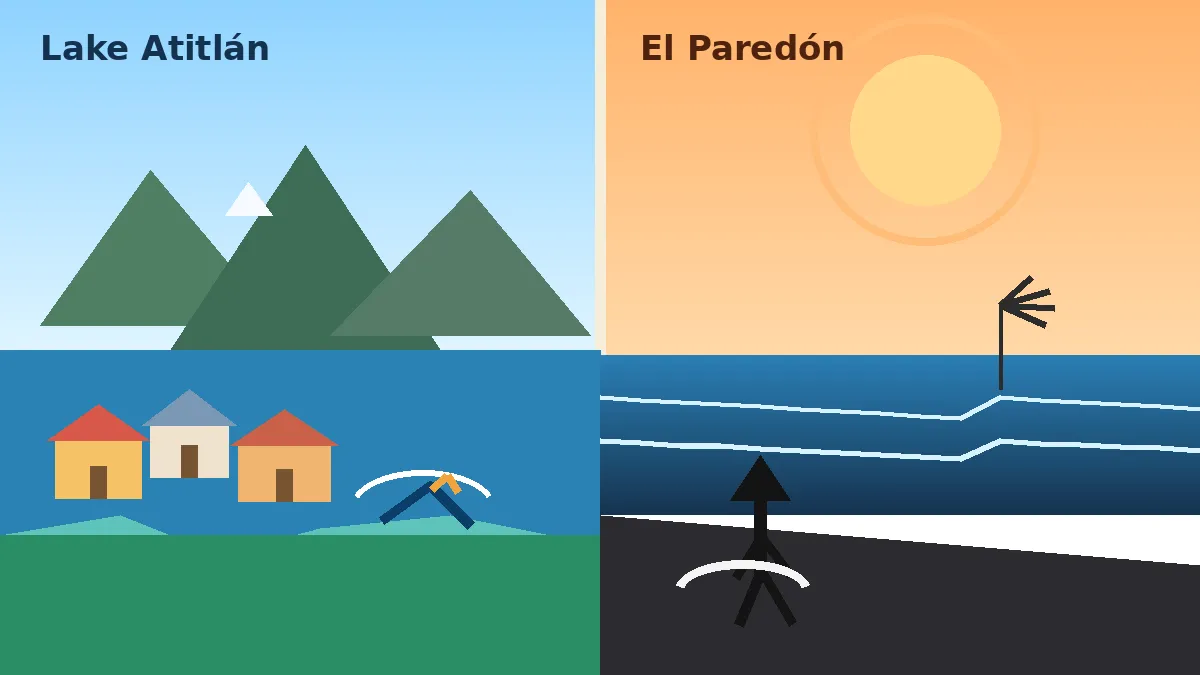
If you are planning a trip to Guatemala, there is a good chance you will run into the same dilemma many travelers face: should you spend more time at Lake Atitlán or head to El Paredón? Both are beautiful, both are memorable, and both offer very different versions of what makes Guatemala special. The problem is that photos alone do a terrible job of helping you choose. A volcano-framed lake and a black-sand surf beach can both look dreamy on Instagram, but they create completely different travel experiences on the ground.
This guide is for travelers who want a realistic comparison, not generic hype. We will look at Lake Atitlán vs El Paredón through the lens of atmosphere, activities, food, budget, accessibility, comfort, and trip style. If you are building a honeymoon, a surf escape, a digital nomad base, a first-time Guatemala itinerary, or a short vacation where every day matters, the right destination depends less on what is objectively “better” and more on how you like to travel.
There is no bad answer here. Lake Atitlán is one of the most iconic destinations in Central America, with Maya culture, mountain scenery, village-hopping, hikes, coffee, and wellness. El Paredón, meanwhile, delivers a stripped-back Pacific coast rhythm: surf sessions, sunset walks, beach hostels, seafood, mangroves, and a quieter village mood built around the ocean. For some travelers, the answer is both. But if you have to prioritize, this article will help you make the call with confidence.
The Quick Answer: Who Should Choose Each Destination?
If you want the short version before diving into the details, here it is.
- Choose Lake Atitlán if you want more variety, more culture, more day trips, cooler weather, better village diversity, and a destination that works well for couples, food lovers, hikers, wellness travelers, and people who like scenic stays with options.
- Choose El Paredón if you want a surf-centered beach trip, hotter weather, a simpler routine, barefoot energy, dramatic sunsets, and a destination that shines for travelers who are happy spending slow days around the ocean.
- Choose both if you have at least 8 to 12 days in Guatemala and want the classic contrast between highland lake culture and Pacific coast beach life.
Now let’s unpack why.
Atmosphere: Volcanic Highlands vs Pacific Surf Village
Lake Atitlán
Lake Atitlán feels layered. You do not just visit one place; you move through a network of towns around the lake, each with its own personality. Panajachel is practical and busy. San Pedro La Laguna is social and backpacker-friendly. San Marcos is known for wellness and yoga. Santiago Atitlán has deeper cultural weight and strong local identity. Santa Catarina Palopó feels photogenic and quiet. That means the atmosphere is not fixed. It changes depending on where you stay and how you move.
The landscape also creates a different emotional texture than the coast. Mornings can be cool and misty. Boat rides feel cinematic. Volcanoes dominate the horizon. Cafés overlook water and mountains instead of waves and sand. The experience is visually dramatic, but it is also more textured culturally. You are constantly aware that this is a living region shaped by Maya communities, local commerce, agriculture, weaving traditions, language, and tourism all at once.
El Paredón
El Paredón is much more singular. It is a small Pacific beach town where the main rhythm is surf, eat, nap, watch sunset, repeat. The roads are sandy, the pace is slower, and the social scene often revolves around beachfront hotels, surf schools, and hostels. There is less variety than at the lake, but that is part of the appeal. People usually go to El Paredón to simplify their day, not to optimize every hour.
The beach itself is striking. The sand is dark, the waves are powerful, and the heat is more intense than in the highlands. It can feel raw in a good way. If Lake Atitlán is a place where your itinerary tends to expand, El Paredón is where it contracts into a few satisfying routines. For some travelers that feels like freedom. For others it feels limiting after two or three days.
Best Activities: More Variety at the Lake, More Focus at the Beach
What to Do at Lake Atitlán
If your question is which destination offers more things to do, Lake Atitlán wins quite easily. That does not automatically make it the better destination, but it does make it more flexible.
- Boat-hop between villages and experience distinct local atmospheres in a single day.
- Hike viewpoints and volcanoes, including Indian Nose and Volcán San Pedro for more active travelers.
- Go kayaking or paddleboarding on calm morning water.
- Visit coffee farms, weaving cooperatives, and local markets.
- Book yoga, massage, or wellness experiences in towns like San Marcos.
- Eat across a wider range of cafés and restaurants, from local comedor meals to destination dining.
Lake Atitlán is also easier to shape around different travel personalities. An active couple can hike and kayak. A slower traveler can sit in a lakeside hotel, take a lancha to lunch, and enjoy village walks. A food-focused traveler can build the trip around coffee, markets, and regional dishes. If you like having options once you arrive, the lake is strong.
What to Do in El Paredón
El Paredón is more specialized, but that specialization is exactly why many people love it. The headline activity is obvious: surfing in El Paredón. Beginners take lessons in whitewater; more experienced surfers look for cleaner, more powerful conditions. Even travelers who never planned to surf often end up trying because the destination makes it easy.
- Take surf lessons or rent a board and spend multiple sessions in the water.
- Join a mangrove boat tour for wildlife, birdlife, and a different side of the coast.
- Watch sunset on the beach, which is not exactly an “activity” but becomes part of daily life.
- Try turtle-related conservation experiences when seasonal and ethically run.
- Relax hard with pool time, seafood, reading, naps, and long beach walks.
The catch is that if you are not interested in surf, beach lounging, or quiet coastal downtime, El Paredón can run out of novelty faster. There are worthwhile non-surf experiences, but the town still works best when you appreciate slow repetition rather than constant variety.
Culture and Sense of Place
This is one of the biggest differences between the two destinations, and it matters more than many travel guides admit.
Lake Atitlán has a much stronger cultural density for the average visitor. The surrounding towns are shaped by Tz’utujil and Kaqchikel Maya communities, traditional weaving, local markets, religious practices, family-run cafés, and regional identity that goes far beyond tourism. You can absolutely skim the surface if you stay inside a nice property and only take pretty photos, but the destination rewards travelers who engage more deeply. Even a simple market walk or coffee tour feels grounded in place.
El Paredón has local life too, of course, but most visitors experience it more as a surf village than a culture-first destination. The identity travelers usually plug into is coastal, social, and hospitality-driven. That is not a criticism; it is just a different kind of trip. If your priority is immersion in highland Guatemala, village character, and a stronger cultural learning curve, Lake Atitlán is the richer fit.
Lake Atitlán tends to stay in people’s memory because it feels like multiple destinations braided together: scenery, culture, food, village life, and outdoor adventure in one compact region.
Food Scene: Which Destination Eats Better?
For pure food variety, Lake Atitlán is ahead. You have more towns, more cafés, more restaurants, more coffee culture, and more opportunities to mix local dishes with international comfort food. Depending on where you stay, your day might include fresh fruit and Guatemalan coffee for breakfast, a lakeside lunch, and a dinner that pulls from local ingredients with a more polished presentation.
The lake region is especially rewarding if you care about trying Guatemalan staples without feeling locked into one narrow dining scene. Handmade tortillas, beans, pepián, stews, fresh produce, coffee, and bakery culture all show up in different ways around the lake. Travelers who like to snack, wander, and compare spots usually do well here.
El Paredón has solid seafood, surf-town brunch culture, cocktails, hostel meals, and beachfront dining, but the range is smaller. That can still be enough for a short stay. In fact, two or three nights of ceviche, grilled fish, smoothies, cold beer, and sunset dinners can be exactly what a traveler wants. But if food is one of the central pillars of your trip, Lake Atitlán usually offers the deeper experience.
Weather and Comfort
Lake Atitlán Weather
The weather around Lake Atitlán is generally milder and more comfortable for many travelers, especially those who dislike intense heat. Mornings and evenings can be cool, and the altitude softens the temperature even on sunny days. That makes it easier to be active, sleep comfortably, and spend long afternoons outdoors without feeling roasted.
The trade-off is that weather can shift more visibly. You may get cloud build-up, rain in the wet season, or chilly mornings that catch underprepared travelers off guard. Still, many people find the highland climate easier to handle than the coast.
El Paredón Weather
El Paredón is hotter, more humid, and more exposed. That is wonderful if your ideal trip involves sun, pool time, beachwear, and jumping between shade and ocean. It is less wonderful if you sleep badly in heat, get drained quickly in humidity, or do not enjoy sandy, sweaty conditions. The climate is part of the destination’s identity. If you want a proper beach feel, it delivers. If you want fresh-air mountain mornings, it does not.
Comfort also depends on infrastructure expectations. Some properties in El Paredón are stylish and comfortable, but the destination as a whole remains more rustic than the polished parts of the lake region. That rustic charm is part of the appeal, yet it is worth being honest about your tolerance for heat, bugs, dust, and the occasional rough edge.
Budget: Is Lake Atitlán or El Paredón Cheaper?
Both destinations can be done on different budgets, but the spending pattern is different.
Lake Atitlán gives you more range. You can go very budget with hostels and local meals, or lean into boutique hotels, lake-view rooms, private boat transfers, and nicer dining. Because there are more towns and more accommodation categories, it is easier to optimize around your wallet.
El Paredón can feel cheap in a backpacker-surf sense, but it can also become surprisingly expensive if you stay in trendy beachfront properties, take multiple lessons, and eat at the most in-demand spots. Since the town is smaller, there is less room to compare dozens of options the way you can around the lake.
In practice, neither destination is automatically “the cheap one.” A careful traveler can keep costs moderate in both. But Lake Atitlán generally offers more flexibility across budget levels.
Ease of Getting There and Getting Around
Getting to Lake Atitlán
Lake Atitlán is a common stop on the Guatemala circuit, and there are many transport options from Antigua and Guatemala City. Shuttles are easy to find, private transfers are straightforward, and the region is well integrated into traveler logistics. Once you arrive, public boats and private launches connect the main villages, which adds both convenience and charm. Movement is part of the experience.
If you enjoy exploring rather than staying anchored to one property the entire time, the lake rewards you. The transport network is imperfect but functional enough that day-to-day mobility becomes relatively intuitive.
Getting to El Paredón
El Paredón is reachable, but it usually feels a little more effortful and a little more limited. Shared shuttles exist from Antigua, and private transfers are common, but the final arrival has more of that “small beach town” energy. Once there, you are mostly walking short distances or moving minimally. That simplicity is nice if your plan is to stay put, but it also means there is less room for spontaneous exploration.
For travelers doing a fast-paced route through Guatemala, Lake Atitlán usually fits more naturally. For travelers who deliberately want to disappear into a beach rhythm, El Paredón’s relative simplicity becomes a feature instead of a drawback.
Who Each Destination Is Best For
Best for Couples
Lake Atitlán is usually the stronger all-around couple destination. It combines beautiful scenery, cooler weather, stylish hotels, boat rides, sunset dinners, and enough activity variety to keep both people happy even if their interests differ. It can feel romantic without requiring you to sit still all day.
El Paredón works well for couples who specifically want surf, beach, and a laid-back barefoot atmosphere. If your ideal romance includes boardshorts, coconuts, and ocean sunsets, it absolutely works. If you want more dining, more excursions, and a deeper cultural dimension, the lake tends to win.
Best for First-Time Travelers to Guatemala
Lake Atitlán is typically the better first-time choice. It captures more of what people imagine when they dream about Guatemala: volcanoes, Maya culture, local textiles, colorful villages, lake views, coffee, and adventure. It feels iconic in a broader way.
El Paredón is better understood as an excellent add-on destination or a targeted beach break rather than the single place that represents the whole country.
Best for Surfers
This one is easy: El Paredón. If surfing is central to your trip, the Pacific coast is the obvious choice. Lake Atitlán has kayaking, paddleboarding, and beautiful water-based experiences, but it is not a surf destination.
Best for Wellness and Slow Travel
Lake Atitlán has the advantage if your version of slow travel includes yoga, healing spaces, longer café mornings, journaling, scenic routines, and a choice between quiet and social. Some travelers love El Paredón for simple beach slowness, but the lake usually gives more depth over a longer stay.
Best for Adventure Variety
Lake Atitlán again. Hiking, village visits, coffee tours, cultural experiences, boat transport, paddling, and nearby viewpoints give it more range. El Paredón is adventure-light unless your adventure is primarily surf.
Can You Combine Lake Atitlán and El Paredón in One Trip?
Yes, and for many travelers this is the smartest answer. A combined trip gives you one of the strongest contrasts in Guatemala: highland lake culture plus Pacific beach life. You get cooler mountain air, village exploration, and scenic activity at the lake, then shift into hot, coastal decompression at the beach.
A balanced structure might look like this:
- 3 to 5 nights at Lake Atitlán for villages, food, hikes, and lake activities.
- 2 to 4 nights in El Paredón for surf, sunset, slower mornings, and a beach reset.
If time is short, though, trying to force both into a rushed itinerary can backfire. Transfers take time, and both destinations deserve more than a single night. If you only have a few days, it is usually better to choose the one that matches your travel style instead of collecting locations.
Why Many Travelers End Up Preferring Lake Atitlán
Even though El Paredón has momentum as one of Guatemala’s most talked-about beach spots, Lake Atitlán tends to leave a deeper overall impression on a wider range of travelers. The reason is simple: it offers more dimensions. It is scenic, active, cultural, photogenic, restorative, and flexible at the same time.
That flexibility matters. A destination that can support adventure in the morning, a long lunch with a lake view, a cultural experience in the afternoon, and a peaceful hotel night tends to age better over a 4- to 6-day stay than a destination built mostly around one activity. Travelers who are unsure what they want often discover that the lake gives them space to find their own pace.
For guests considering a comfortable base with access to village life and lake excursions, staying at Sababa Resort makes that flexibility easy to enjoy. You can build a trip around scenic rest, cultural outings, food, and outdoor experiences without giving up comfort at the end of the day.
FAQ: Lake Atitlán vs El Paredón
Is Lake Atitlán better than El Paredón?
It depends on your travel style. Lake Atitlán is better for travelers who want culture, scenery, hiking, village exploration, wellness, and more activity variety. El Paredón is better for travelers who want surfing, beach time, hot weather, and a simpler coastal rhythm.
How many days do you need in Lake Atitlán?
Most travelers should spend at least 3 to 4 nights at Lake Atitlán. That gives you enough time to explore more than one town, enjoy lake activities, and avoid turning the destination into a rushed photo stop.
How many days do you need in El Paredón?
El Paredón works well for 2 to 3 nights, though surfers and very slow travelers may stay longer. For many visitors, it is ideal as a short beach break within a broader Guatemala itinerary.
Is El Paredón worth visiting if you do not surf?
Yes, especially if you enjoy beach sunsets, seafood, a relaxed atmosphere, mangrove tours, and doing less. But if you need a wider variety of activities, Lake Atitlán is usually the better fit.
Which is better for first-time visitors to Guatemala?
Lake Atitlán is usually the better first-time destination because it combines iconic scenery, Maya culture, food, villages, and outdoor experiences in one region. It offers a broader introduction to Guatemala than El Paredón.
Can you visit both Lake Atitlán and El Paredón on the same trip?
Absolutely. In fact, many travelers do. The combination works particularly well if you have at least 8 to 12 days in Guatemala and want both highland scenery and Pacific coast downtime.
Final Verdict
If your ideal trip is built around surf, heat, and beach simplicity, choose El Paredón. If your ideal trip is built around scenery, culture, food, comfort, and a broader mix of experiences, choose Lake Atitlán. For most first-time visitors, couples, and travelers who want the most rounded destination, Lake Atitlán is the safer and more rewarding bet.
That does not make El Paredón second-rate. It just means the two places solve different travel problems. One gives you a beautifully varied highland base. The other gives you a focused coastal exhale. Pick the one that sounds most like the version of Guatemala you want to remember.
If you are leaning toward the lake, start with a stay that lets you pair comfort with exploration, then branch out into villages, food, water activities, and local experiences from there. That is where Lake Atitlán tends to become more than just a pretty stop and starts feeling like the center of the trip.