
Sea Turtle Season in El Paredón: When to Go and What to Expect
# Sea Turtle Season in El Paredón: When to Go and What to Expect
Every year, thousands of sea turtles crawl onto the black sand beaches of El Paredón to lay their eggs. Weeks later, tiny hatchlings emerge and scramble toward the Pacific Ocean. It’s one of the most powerful wildlife experiences in Central America — and you can be part of it.
## The Turtles of El Paredón
Two species primarily nest on El Paredón’s beaches:
### Olive Ridley Sea Turtle (*Lepidochelys olivacea*)
– **Most common species** on Guatemala’s Pacific coast.
– Adults weigh 35-50 kg (77-110 lbs).
– Heart-shaped shell, olive-green color.
– Can lay 80-120 eggs per nest.
– Listed as Vulnerable on the IUCN Red List.
### Leatherback Sea Turtle (*Dermochelys coriacea*)
– **Largest sea turtle in the world** — adults can exceed 500 kg (1,100 lbs).
– Rare but occasionally nests at El Paredón.
– Distinguished by its leathery, ridged shell (no hard scutes).
– Critically Endangered.
Occasional green sea turtles (*Chelonia mydas*) have also been recorded, though less frequently.
## When Is Turtle Season?
### Nesting Season: July – December
Female turtles come ashore at night to dig nests and lay eggs. Peak nesting is **August – October**.
### Hatching Season: September – February
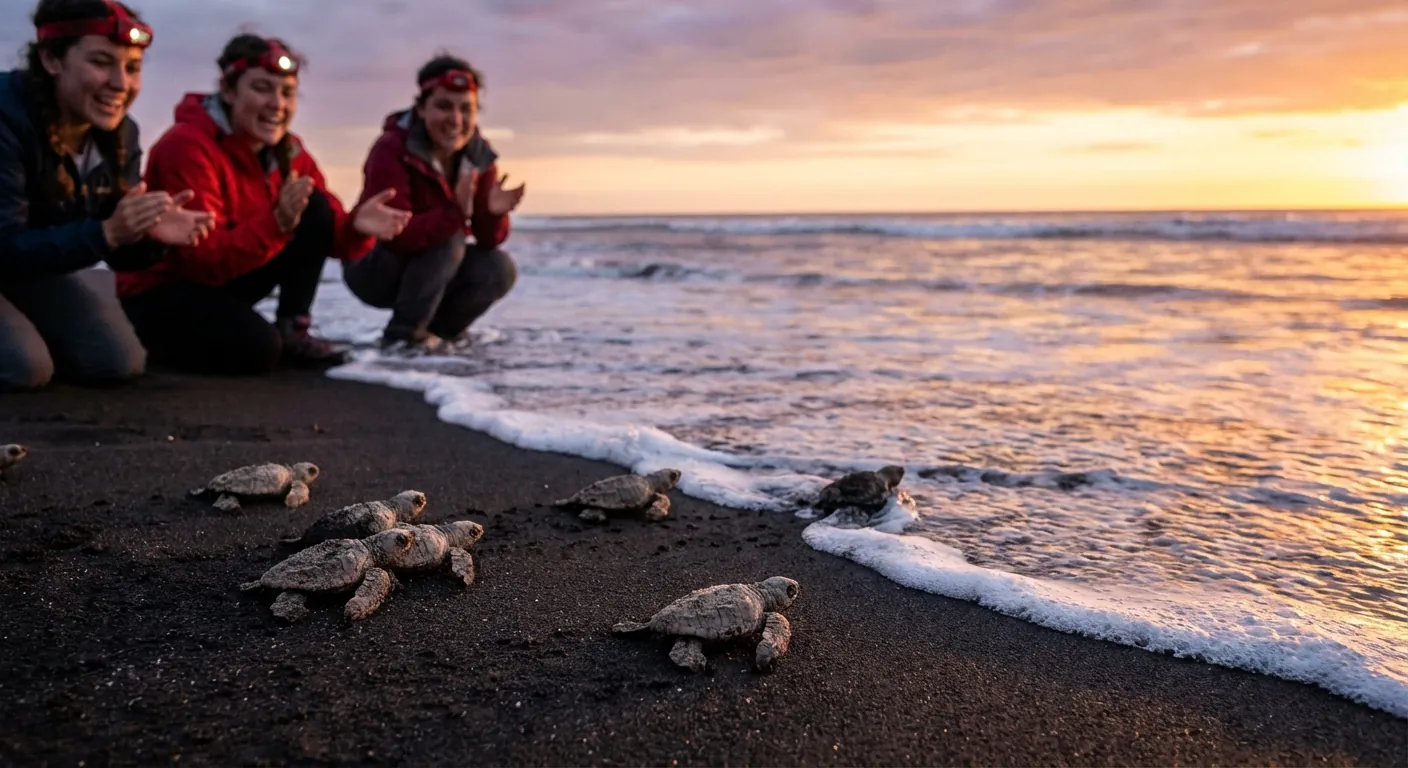
Eggs incubate for approximately 45-60 days. Once they hatch, baby turtles are released into the ocean — usually at sunset.
### Best Time to Visit
| Experience | Best Months |
|—|—|
| Watch nesting (night patrols) | August – October |
| Baby turtle releases | September – December |
| Peak activity (both) | September – November |
**September and October** are the absolute peak — you’re almost guaranteed to participate in a turtle release during these months.
## The Turtle Release Experience
This is what most visitors come for, and it lives up to the hype.
### How It Works
1. **Eggs are collected** from nests on the beach by conservation workers (to protect them from poachers and predators).
2. **Eggs are incubated** in protected hatcheries (*viveros*) managed by local organizations.
3. **When hatchlings emerge**, they’re kept briefly in containers.
4. **At sunset**, visitors and volunteers gather on the beach for the release.
5. **Hatchlings are placed on the sand** and make their way to the ocean on their own.
### What to Expect
– Releases typically happen between **5:00–6:00 PM** (sunset).
– You’ll hold baby turtles in your hands before placing them on the sand.
– Watching dozens of tiny turtles scramble toward the waves under a Pacific sunset is genuinely emotional.
– The entire experience lasts about 30-45 minutes.
– Most hostels and lodges in El Paredón organize releases or can point you to one.
### Cost
– **Free to Q50** — some hatcheries ask for a small donation to support conservation efforts. Always contribute if you can — these projects run on goodwill and donations.
## Conservation in El Paredón
### The Problem
Sea turtles in Guatemala face serious threats:
– **Egg poaching**: turtle eggs are considered a delicacy and aphrodisiac in parts of Guatemala. Despite being illegal, poaching persists.
– **Habitat loss**: coastal development and light pollution disorient nesting females and hatchlings.
– **Fishing bycatch**: turtles get caught in nets.
– **Plastic pollution**: turtles mistake plastic for jellyfish.
### Local Conservation Efforts
Several community-based projects in El Paredón work to protect sea turtles:
– **Night patrols** along the beach to locate nesting females and collect eggs before poachers do.
– **Protected hatcheries** where eggs incubate safely.
– **Community education** programs to shift attitudes about egg consumption.
– **Volunteer programs** that welcome travelers to participate.
### How Conservation Works on the Ground
Local *tortugueros* (turtle guardians) patrol the beach from dusk to dawn during nesting season. When a female turtle is spotted, they wait for her to lay, then carefully collect the eggs and transport them to the hatchery. Each nest is marked with the date and number of eggs. When hatchlings emerge, they’re released as quickly as possible.
> **Important**: Guatemala operates a unique system where a percentage of collected eggs (historically around 20%) are legally allowed to be sold, with the rest protected in hatcheries. This compromise incentivizes fishermen and locals to participate in conservation rather than poach entire nests.
## How to Get Involved
### Short-Term: Join a Release
If you’re visiting for a few days during hatching season, most accommodations can arrange a turtle release experience. Just ask when you arrive.
### Medium-Term: Volunteer
Several hatcheries accept volunteers for stays of 1-4 weeks. Volunteer work includes:
– Night beach patrols (10 PM – 4 AM shifts).
– Hatchery maintenance.
– Recording data (egg counts, species identification).
– Assisting with releases.
– Community outreach.
**Cost**: some programs are free (you just pay for food/accommodation); others charge a volunteer fee of Q500-Q1,500/week that goes directly to conservation.
### Long-Term: Donate or Support
Even after you leave, you can support El Paredón’s turtle conservation:
– Donate to local hatcheries.
– Share their social media pages.
– Spread the word to other travelers.
## Responsible Turtle Tourism
### Do
– Follow instructions from conservation staff.
– Keep your distance from nesting females (if on a night patrol).
– Turn off flash photography — it disorients turtles.
– Use red-light headlamps during night patrols.
– Let hatchlings walk to the ocean on their own (don’t carry them).
– Contribute financially to the projects.
### Don’t
– Touch or ride adult turtles.
– Use flash photography.
– Make loud noises on the beach at night.
– Buy turtle eggs — it’s illegal and fuels poaching.
– Use white-light flashlights near nesting areas.
– Litter on the beach (especially plastic).
## Combining Turtle Season with Surfing
September–October is also solid surf season at El Paredón. You can surf all morning and release baby turtles at sunset — it’s the ultimate El Paredón itinerary.
## Getting to El Paredón
– **From Antigua**: 2.5–3 hour shuttle (Q100–Q200).
– **From Guatemala City**: 2.5 hours by car.
– **From Lake Atitlán**: travel via Antigua (full day).
## Practical Tips
– **Bring cash** — El Paredón has no ATMs.
– **Bring mosquito repellent** — especially for night patrols near the mangroves.
– **Wear dark clothing** for night patrols (less visible to turtles).
– **Bring a red-light headlamp** if you plan to patrol.
– **Book in advance** during September–October — El Paredón’s limited accommodations fill up.
## FAQ
### Can I see turtles year-round?
No. Nesting season is July–December and hatching is September–February. Outside these months, there’s no turtle activity on the beach.
### Is the turtle release suitable for children?
Absolutely. It’s one of the most family-friendly wildlife experiences in Guatemala. Kids love it.
### How many baby turtles survive to adulthood?
Approximately 1 in 1,000 hatchlings survives to adulthood. That’s why conservation is so critical — every nest protected matters.
### Can I volunteer for just one night?
Some hatcheries allow single-night patrol volunteers. Ask locally — flexibility varies by organization.
### Is it legal to eat turtle eggs in Guatemala?
The sale and consumption of sea turtle eggs is illegal in Guatemala. If you’re offered them, decline.
## Final Thoughts
Releasing baby sea turtles into the Pacific Ocean at sunset is one of those travel experiences that stays with you permanently. El Paredón’s conservation work is making a real difference, and every visitor who participates — and contributes — helps ensure these ancient creatures keep coming back. Time your trip for September or October, and you’ll witness something extraordinary.