
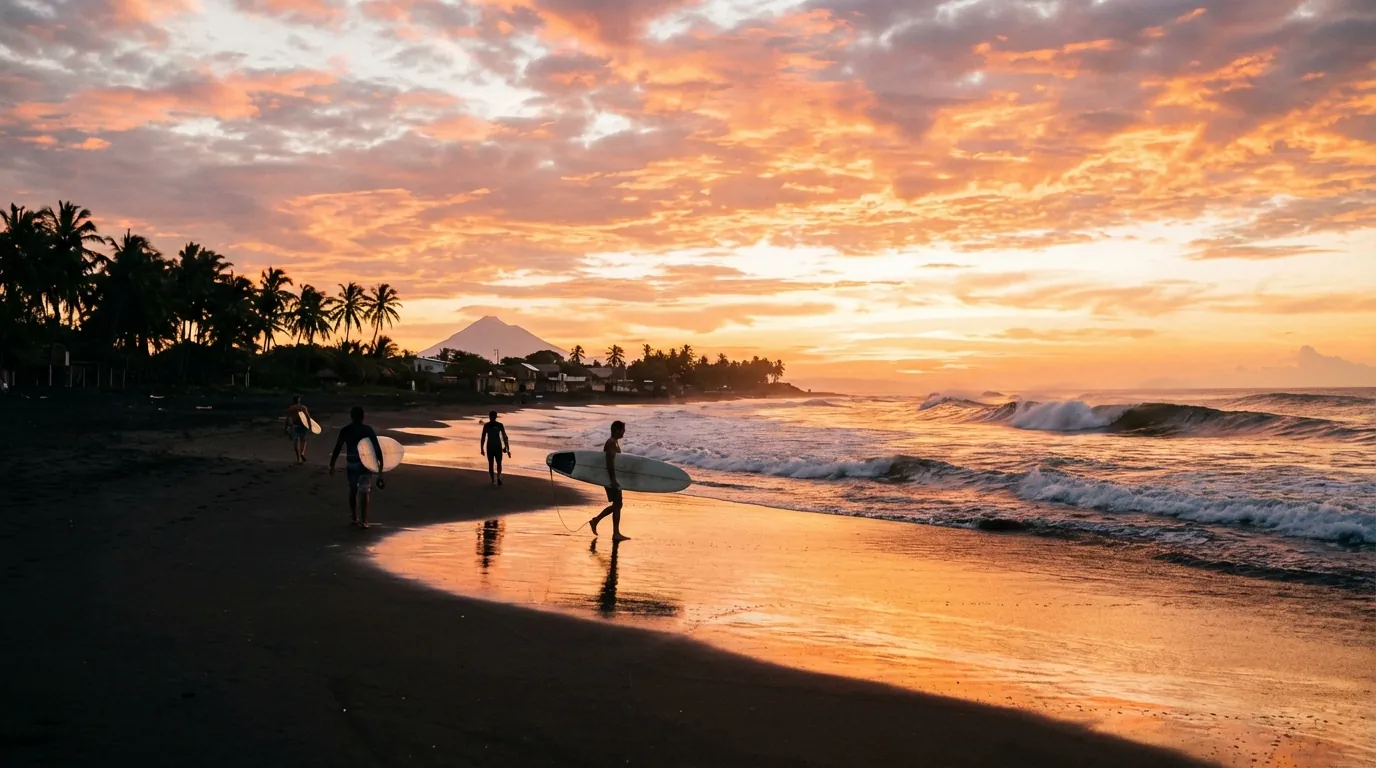
Backpacking El Paredón: Guatemala on a Budget
El Paredón is one of the cheapest beach stops in Guatemala. There is no entrance fee, no marina, no beach club minimum: you pay for a bed, for food and for the odd surf lesson, and the sunset is free every day.
This guide is the money side of the village — what a dorm costs, how to arrive without a shuttle, where the Q25 meals are, and what a realistic three-day budget looks like. All figures are ranges travelers report; confirm prices on the spot, because they move with the season.
Why El Paredón stays cheap
It is a fishing village in the Sipacate municipality, Escuintla, about 100–120 km from Antigua. The last 12 km are dirt road, there is no big hotel chain, no supermarket and, in practice, no ATM. Fewer comforts means lower prices — and a daily budget closer to Lake Atitlán's lakeside villages than to a resort town.
Daily budget for a backpacker
| Item | Lean | Comfortable |
|---|---|---|
| Dorm bed | Q80–Q120 | Q150–Q200 |
| Food (3 meals) | Q80–Q120 | Q150–Q250 |
| Activities | Q0–Q50 | Q150–Q300 |
| Local transport (tuk-tuk) | Q0–Q20 | Q40–Q60 |
| Day total | Q160–Q310 | Q490–Q810 |
In US dollars that is roughly 20–40 USD for a lean day and 60–105 USD if you surf, eat seafood and take a tour every day. The single biggest lever is the bed: a Q100 dorm instead of a Q400 private room saves more than every food decision combined.
Getting there cheaply
From Antigua by chicken bus
The cheapest route runs Antigua → Escuintla → Sipacate → El Paredón, with two or three changes and a total of four to five hours. The bus legs cost a few quetzales each; the last stretch is a microbus or a tuk-tuk. It works, it is slow, and it is hard with a surfboard.
From Antigua by shared shuttle
Around Q100–Q200 per person, 2 to 2.5 hours, door to door, with space for boards if you ask when booking. For a solo traveler with luggage the shuttle often costs less than the chicken bus once you add the taxis and the lost afternoon. Schedules and pickup details are in the Antigua to El Paredón shuttle guide.
From Antigua by private transfer
Quoted around Q400–Q700 per car, which is worth it for a group of three or four with boards.
From Guatemala City
Bus to Escuintla (around Q15), microbus to Sipacate (around Q15), then a boat or tuk-tuk to the village. Under Q50 in total if you are patient.
From Lake Atitlán
The common backpacker combination is a lancha across the lake, a bus or shuttle to Antigua (Q100–Q150), and then the coast shuttle. Direct transfers are quoted around Q200–Q300 when an operator runs them. Compare it with the route in our two-week Lake Atitlán and El Paredón itinerary.
Where the budget sleeps
The dorm band is where the savings are: most dorms include breakfast and a pool, and they sit within walking distance of the break. Ask for a bottom bunk away from the bar if you want to sleep before midnight on a weekend. Couples should do the maths on a private room against two dorm beds; the area-by-area breakdown is in where to stay in El Paredón.
Eating on Q100 a day
- Comedores: Q20–Q40 for a set lunch of beans, rice, tortillas and fish. This is the best value in the village and the fish is usually landed that morning.
- Seafood plate at a beach restaurant: Q40–Q80 for fish or shrimp with rice and salad.
- Breakfast: Q25–Q40 at a hostel, or fruit and bread from a tienda for Q15.
- Water and drinks: buy a big bottle at a tienda and refill; beach bars charge tourist prices.
- Beer: Q15–Q25 from a shop, two or three times that at a bar with a sunset view.
Free things that are worth the day
- The beach itself: kilometres of black sand, no fee, no sunbeds to rent.
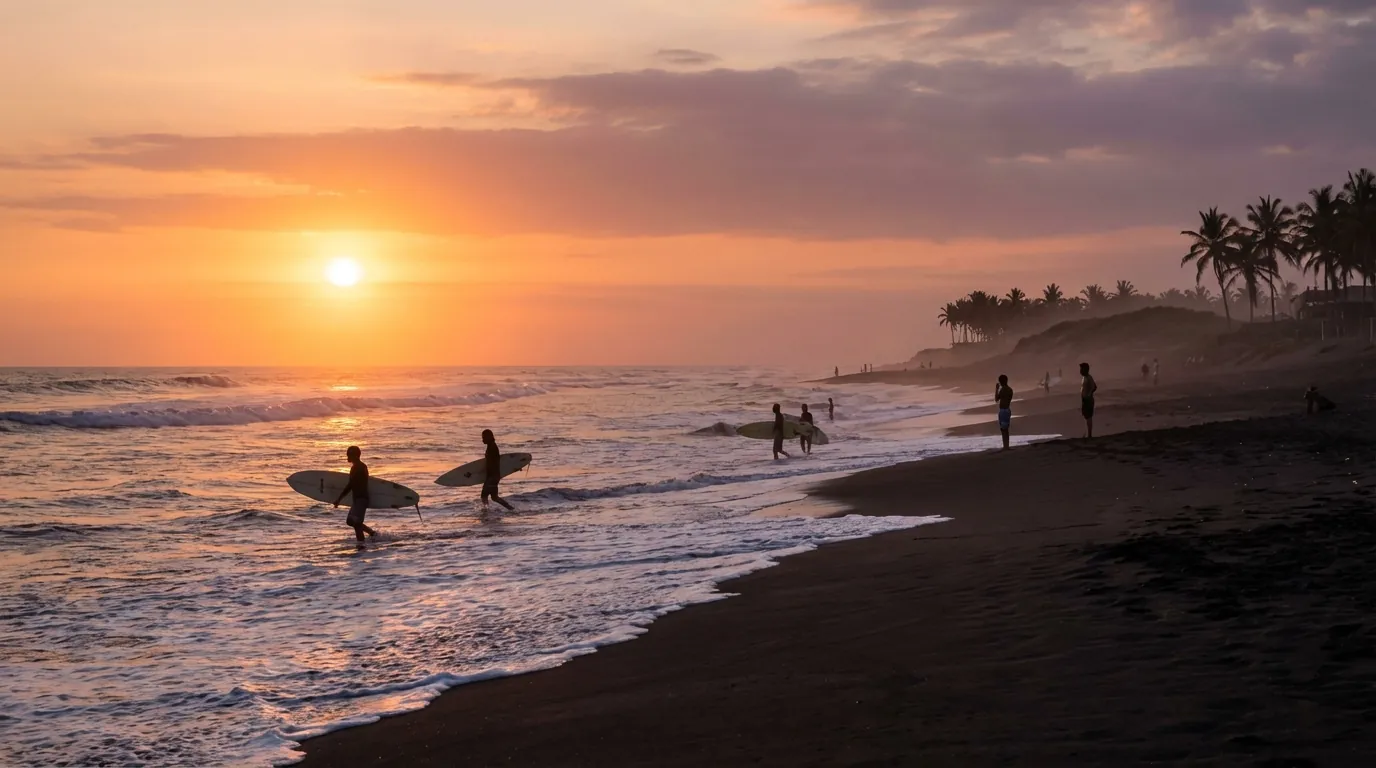
- Sunrise and sunset: walk to the water at 5:45 AM for glassy offshore surf, and back at 6 PM for the sunset.
- Watching the surf: the main break is a 20-minute show; sit at the inside and learn the currents before you pay for a lesson.
- Village walk: the fishing boats, the dry-boat yard and the mangrove edge behind the village cost nothing.
- Turtle releases in season: some projects ask only a Q25–Q50 donation per person. Season details in the turtle release guide.
What is worth paying for
| Activity | Price per person | Why |
|---|---|---|
| Surf lesson (1.5–2 h, board included) | Q150–Q250 | The shore break is heavy; one lesson on currents pays for itself |
| Board rental (day) | Q75–Q150 | Cheaper than a lesson once you can paddle out alone |
| Mangrove boat tour (1–2 h) | Q100–Q200 | Herons, kingfishers, iguanas and the Sipacate-Naranjo channels |
| Yoga class | Q40–Q80 | Often included at hostels; the cheapest way to stretch a sore back |
| Turtle release donation | Q25–Q50 | Pays the hatchery, not a tour operator |
The wave calendar decides whether the lesson is worth it: read the El Paredón surf guide before you book. November to February is smaller and better for learning; May to September is bigger and for experienced surfers.
Money, cash and the one real trap
- Bring cash. There is no reliable ATM in the village. Withdraw in Antigua, Escuintla or Sipacate before the last leg.
- Carry small bills. Q100 notes are hard to break at a comedor.
- Budget the shuttle back. Many travelers spend the return fare on the last night.
- Ask the price first for tuk-tuks and tours; there is no meter and no published rate card.
- Rainy season: May to October brings afternoon storms and a muddier dirt road. It also brings the best surf and the lowest room rates.
A realistic three-day budget
Three nights of dorm, comedor food, one surf lesson, one mangrove tour and the return shuttle add up to roughly Q900–Q1,500 for a solo traveler: Q300–Q450 in beds, Q240–Q450 in food, Q150–Q250 for the lesson, Q100–Q200 for the mangroves and Q100–Q200 for the shuttle home. Swapping the dorm for a private room adds Q200–Q400, and eating at a beach restaurant every night adds Q60–Q120 over the comedor.
When you want the pool and the restaurant
Budget travel and comfort are not exclusive in El Paredón: the village is small enough that a beachfront stay is a short walk from the Q30 lunch. If you want to split the trip, Sababa Resort El Paredón is the resort's Pacific property, with a pool, a restaurant and rooms described in the eco-luxury overview, the amenities guide and the menu.
Rates and availability are not published here and change with the season. Confirm directly: ask on WhatsApp or write through the contact page.
Planifica con guías útiles
Ver resortSababa Resort San Pedro
El resort frente al Lago de Atitlán: ubicación, habitaciones, restaurante y actividades.
Sababa Resort El Paredón
La sede en la costa del Pacífico: surf, playa de arena negra, tortugas, manglares y reservas.
Menú
Platos, pastas, postres, cocteles, smoothies y bebidas publicados por Sababa Resort.
Actividades
ATV, deportes acuáticos, Indian Nose, yoga, masaje, volcán San Pedro y kayak.